
 Bookmark
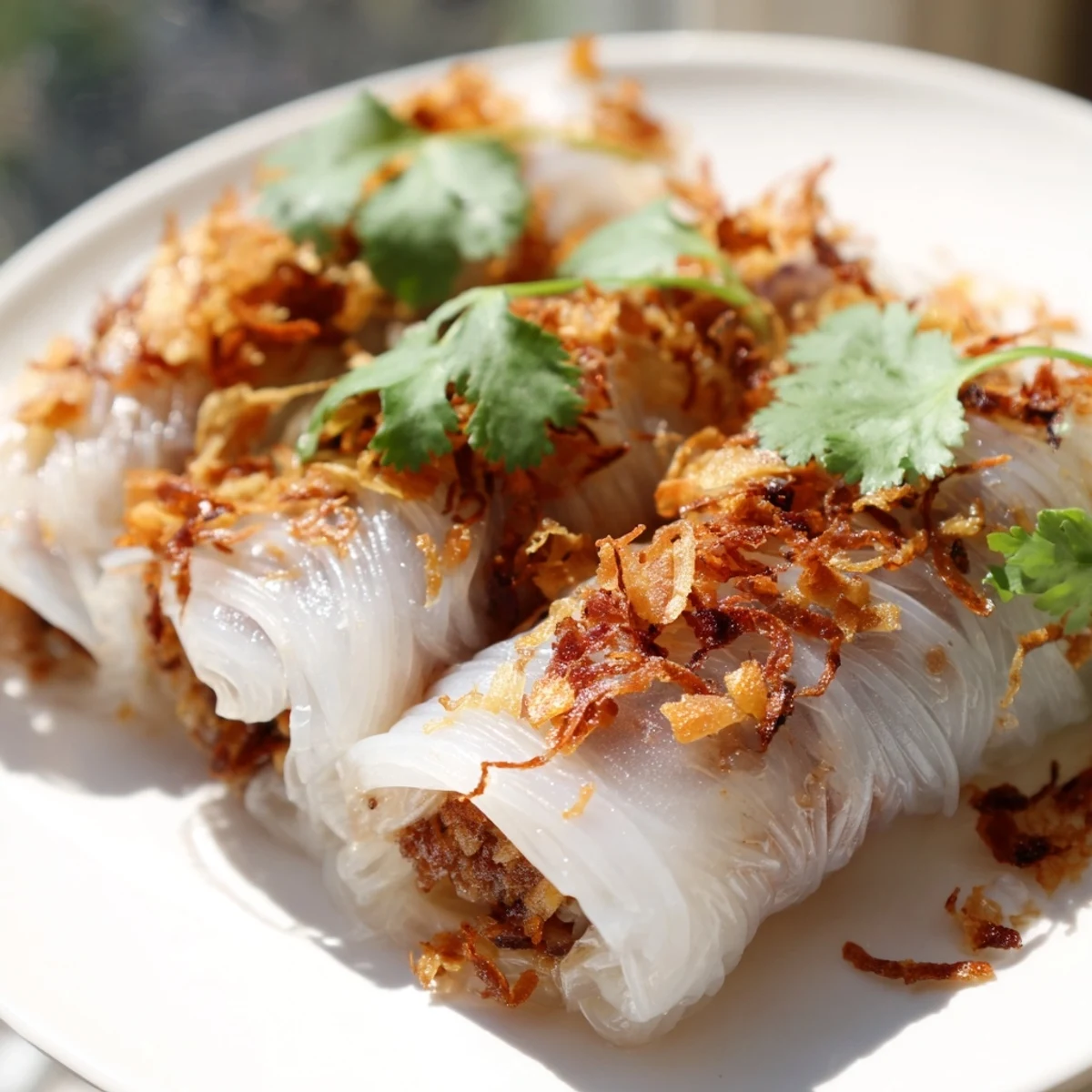
 These delicate Vietnamese rice rolls feature impossibly thin, silky wrappers steamed to perfection and filled with a savory mixture of ground pork, wood ear mushrooms, and aromatic seasonings. The dish comes alive with contrasting textures and flavors—crunchy bean sprouts, crisp cucumber slices, fragrant cilantro, and crispy fried shallots crown each roll. The entire experience is anchored by homemade nuoc cham, a bright and tangy dipping sauce that perfectly balances the rich, umami-filled filling. While the technique requires some practice to achieve the signature translucent wrapper, the result is an extraordinarily satisfying meal that captures the essence of Vietnamese cuisine.
The first time I watched my aunt make banh cuon, I could not believe how fast her hands moved. One moment the steamer was empty, the next she was lifting these translucent rice sheets onto a plate, filling them, and rolling them up in one fluid motion. It took me years to understand that the secret is not speed at all. It is patience with the batter and a gentle touch when lifting those delicate sheets.
Last Sunday morning, my kitchen was filled with the smell of shallots frying and the steam from the rice batter curling toward the ceiling. My roommate wandered in, sleepy and curious, and ended up staying to help roll the banh cuon assembly line style. We ate standing at the counter, dipping the warm rolls into that tangy sauce, and agreed it was better than any restaurant version.
Ingredients
- Rice flour: The foundation of the batter, use a fine Vietnamese rice flour for the silkiest texture
- Tapioca starch: Adds that essential stretch and translucency to the cooked rice sheets
- Cornstarch: Helps create a delicate, pliable wrapper that will not tear during rolling
- Ground pork: The classic filling, though you can substitute chicken or keep it vegetarian with seasoned tofu
- Wood ear mushrooms: Soak them until they are soft and springy, then chop them small for even texture throughout the filling
- Fried shallots: These add essential crunch and a sweet savory aroma that elevates the whole dish
- Fresh cilantro: Use whole leaves for garnish, they bring brightness that cuts through the rich filling
Instructions
- Prepare the rice batter:
- Whisk together rice flour, tapioca starch, cornstarch, salt, water, and vegetable oil until completely smooth. Let it rest for at least 20 minutes so the starches can fully hydrate, which prevents lumpy steaming.
- Cook the filling:
- Heat oil in a skillet over medium heat, then sauté onions and garlic until fragrant. Add ground pork and cook until browned, then stir in chopped wood ear mushrooms, fish sauce, and pepper for 2 to 3 minutes until everything is fragrant and fully cooked.
- Mix the dipping sauce:
- Combine fish sauce, lime juice, sugar, and warm water in a small bowl, stirring until the sugar dissolves completely. Add minced garlic and sliced chili, then adjust the balance to your taste with more lime or sugar.
- Steam the rice sheets:
- Bring water to a boil in your steamer or large pan topped with a lightly oiled cloth or silicone tray. Ladle about 1/4 cup of batter onto the surface, swirling quickly to coat evenly, then cover and steam for 1 to 2 minutes until the sheet is set and slightly translucent.
- Roll it all together:
- Use a thin spatula to gently lift the cooked sheet onto a lightly oiled plate, being careful not to tear it. Place a spoonful of filling along one edge and roll up tightly, then repeat until you have used all the batter and filling.
- Garnish and serve:
- Arrange the rolls on a platter and top generously with fried shallots, fresh cilantro, bean sprouts, cucumber, and sliced pork sausage if you like. Serve immediately with the nuoc cham dipping sauce on the side.
 Bookmark
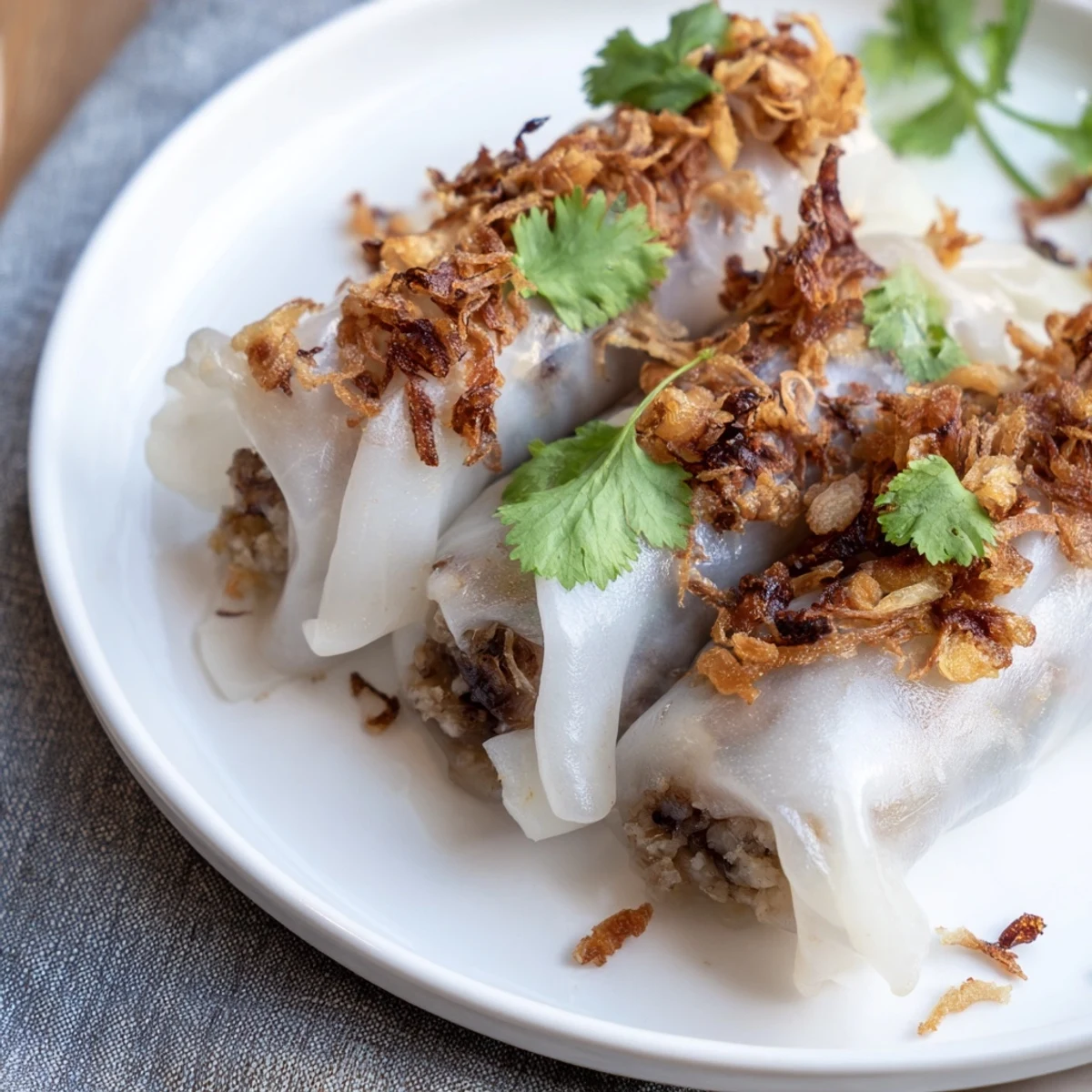
 Something magical happens when you place a plate of freshly made banh cuon on the table. The steam still rising from the rolls, the herbs glistening with moisture, that first dip into the bright, tangy sauce. It turns a simple breakfast into an occasion.
Getting the Texture Right
I learned the hard way that resting the batter is nonnegotiable. One time I rushed it and ended up with rice sheets that were thick and chewy instead of silky and delicate. Now I always let the batter sit while I prep the filling, which gives me plenty of time to chop the wood ear mushrooms finely and get my steaming station set up perfectly.
Steaming Setup Tips
You do not need any special equipment beyond a wide pan with a lid. I use a nonstick skillet with a tight fitting lid and a piece of cotton cloth stretched over the top, secured with rubber bands. The cloth should be taut and lightly oiled so the rice sheets release easily when they are done steaming.
Making Ahead and Storing
Banh cuon is best eaten immediately, while the rice rolls are still warm and tender. However, you can prepare the filling and sauce ahead of time to streamline the process.
- Store the cooked filling in the refrigerator for up to 2 days
- Reheat gently before rolling so it does not cool down the rice sheets
- The dipping sauce actually improves after an hour in the fridge
 Bookmark
 There is something deeply satisfying about making banh cuon at home, about turning simple ingredients into something so delicate and special. Gather some friends, set up a little assembly line, and enjoy the process together.
Recipe FAQs
- → What makes Banh Cuon wrappers so delicate?
-
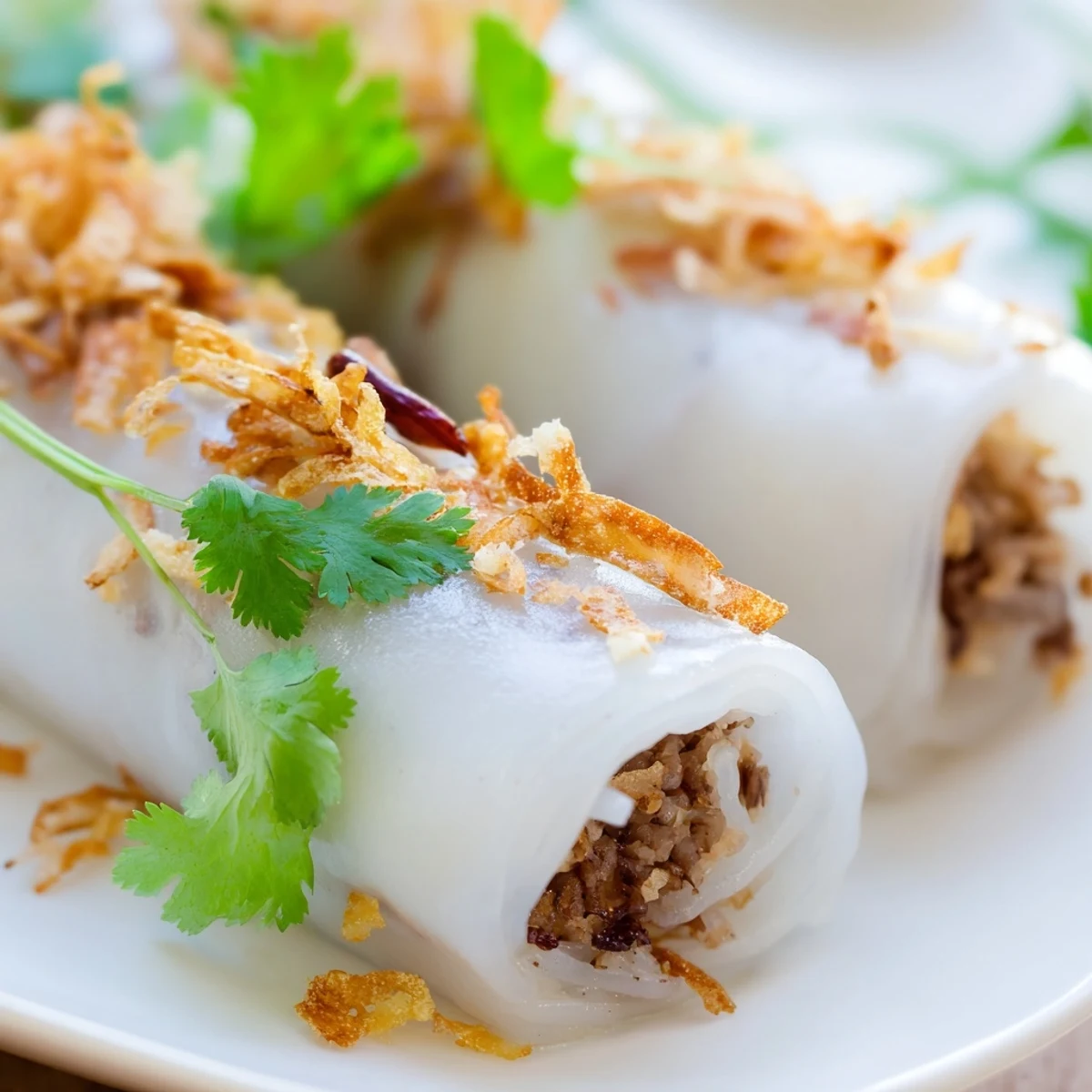
The wrapper's signature silkiness comes from the combination of rice flour, tapioca starch, and cornstarch. The batter must be thin, almost like crepe batter, and steamed briefly over high heat. This creates a translucent, tender sheet that's pliable enough to roll but delicate enough to tear easily.
- → Can I make Banh Cuon without a steamer?
-
Yes, a nonstick pan with a lid works well as an alternative. The key is maintaining a thin layer of batter and covering it immediately to trap the steam. The cloth-covered surface method is traditional, but a well-oiled nonstick surface produces similar results.
- → How do I store leftover Banh Cuon?
-
Banh Cuon is best enjoyed immediately, as the wrappers tend to stick together and lose their delicate texture when refrigerated. If you must store them, layer between parchment paper and refrigerate for up to 1 day. Reheat gently by steaming for 1-2 minutes before serving.
- → What can I use instead of wood ear mushrooms?
-
Shiitake mushrooms work beautifully as a substitute, providing a similar chewy texture and earthy flavor. Fresh button mushrooms can also be used, though they'll release more moisture during cooking and may require slightly longer cooking time to evaporate the excess liquid.
- → Is Banh Cuon naturally gluten-free?
-
The rice-based wrapper and filling are naturally gluten-free. However, traditional fish sauce may contain wheat-derived additives, and the optional cha lua (Vietnamese sausage) often includes wheat starch. Using certified gluten-free fish sauce and omitting the sausage ensures the dish remains gluten-free.
- → Why does my batter tear when rolling?
-
Tearing usually occurs when the wrapper is too thin or undercooked. Ensure you're steaming for the full 1-2 minutes until the sheet is fully set and slightly translucent. Also, make sure your steaming surface is properly oiled to prevent sticking, which can cause tears when lifting.
