
 Bookmark
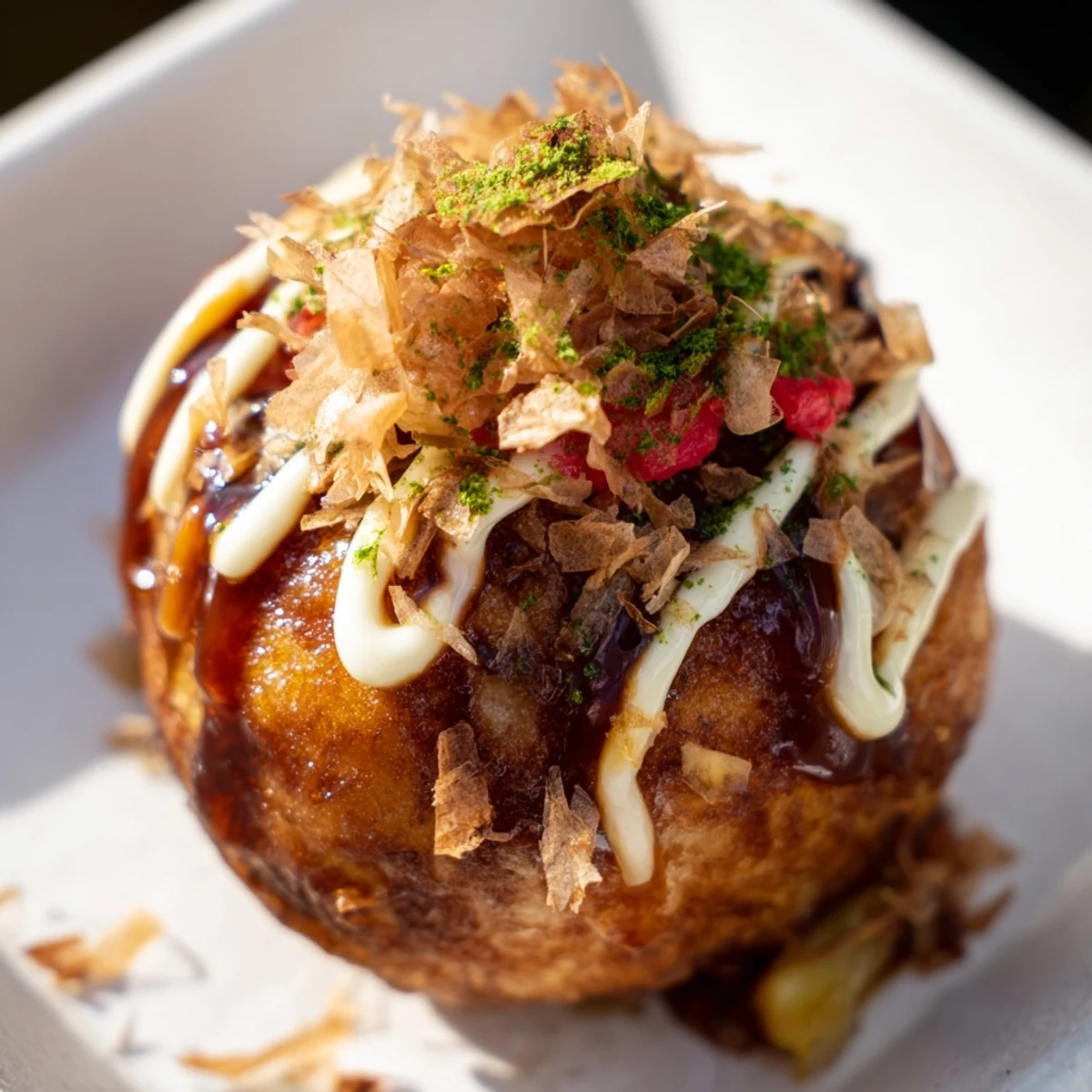
 Master the art of making these iconic Japanese street food snacks from the comfort of your kitchen. Each golden sphere delivers a perfect contrast: a crisp, lacy exterior giving way to a soft, creamy center with tender chunks of octopus in every bite. The preparation involves whisking a smooth dashi-based batter, heating a special pan, and carefully turning each sphere to achieve that signature round shape. What makes these truly special is the combination of textures—crunchy tenkasu (tempura scraps), tender octopus, and sharp pickled ginger—along with the dramatic presentation of bonito flakes that dance and wave from the residual heat as they're served.
The first time I attempted takoyaki was during a rainy evening in college, my tiny apartment filled with steam and the smell of dashi. My Japanese roommate showed me the rolling technique, her hands moving so fluidly while I fumbled with my chopsticks, creating irregular lopsided balls. Now, watching the bonito flakes dance and curl on top of these golden spheres still brings me back to that cramped kitchen, laughing over our messy attempts and eating the imperfect ones straight from the pan.
I made these for my partners birthday last year, setting up a little takoyaki station on our dining table. We took turns at the pan, drinks in hand, competing to see who could make the roundest ones. By the end of the night, the kitchen was chaos, there were flour smudges on every surface, but nobody cared because we were too busy burning our fingers on hot octopus pieces and declaring every batch the best one yet.
Ingredients
- 1 cup all-purpose flour: The foundation, though ive learned sifting it first prevents those annoying lumps in your batter
- 2 large eggs: Room temperature eggs whisk in so much better and create that silky smooth consistency you want
- 2 cups dashi stock: Homemade dashi transforms these from good to incredible, but quality dash powder works in a pinch
- 1/2 tsp soy sauce: Just enough to deepen the flavor without making the batter too dark or salty
- 1/2 tsp salt: Balances everything out, especially important if your dashi is on the lighter side
- 120 g cooked octopus: The chewy tender chunks are what make these authentic, but cut them small enough to cook through
- 1/4 cup tenkasu: These tempura scraps create these incredible crunchy pockets throughout the batter
- 2 tbsp pickled red ginger: Adds these bright acidic bursts that cut through the richness
- 2 green onions: Fresh onion bits bring a mild sharpness that balances the savory elements
- Takoyaki sauce: Store bought is perfectly fine, but that homemade worcestershire and ketchup mix is actually closer to street food style
- Japanese mayonnaise: The creamy tang is non negotiable, regular mayo just doesnt have the same richness
- Aonori: These seaweed flakes add an oceanic umami note that ties everything together
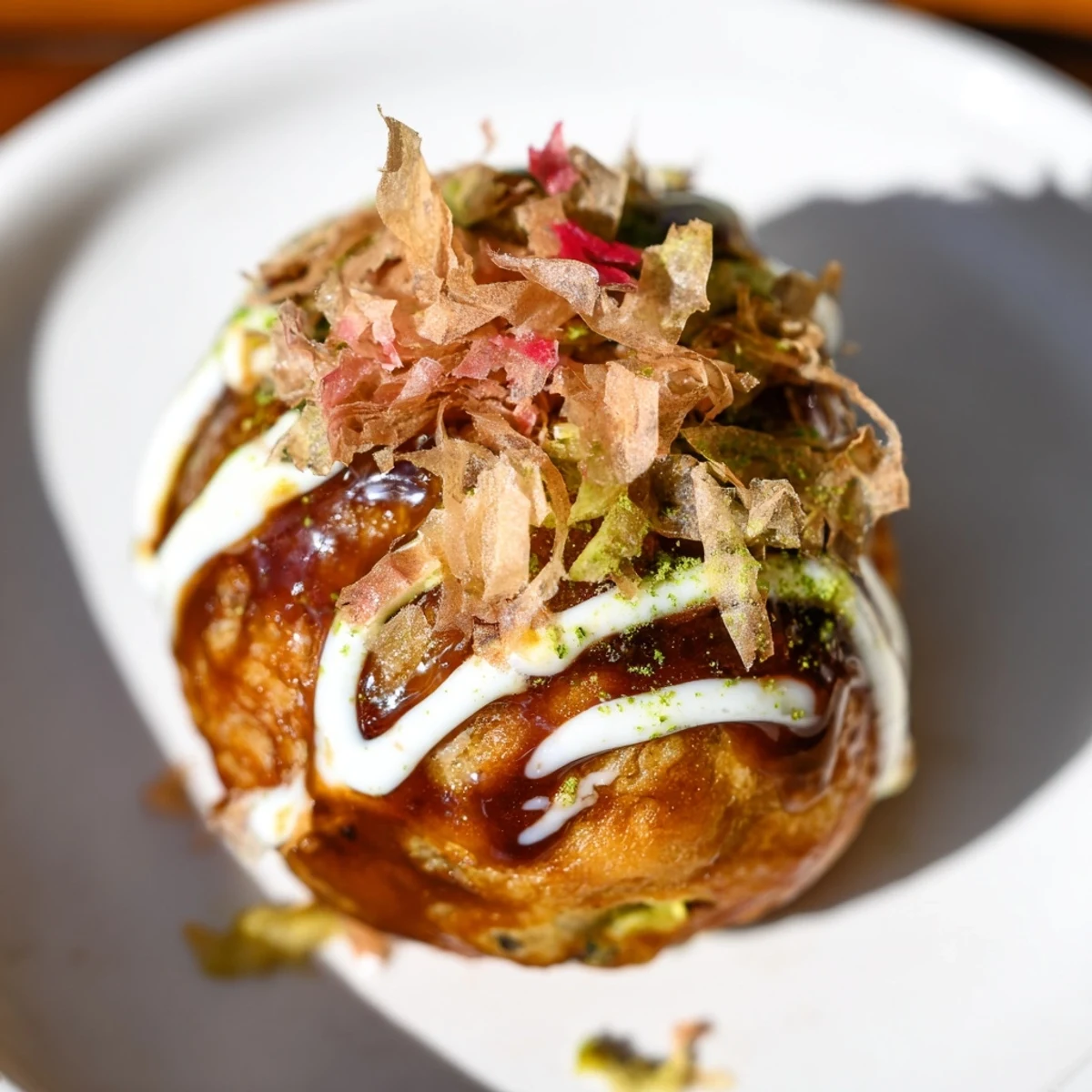
- Katsuobushi: Watching them dance on the hot balls is half the fun, plus they add this incredible smoky depth
Instructions
- Whisk your batter until smooth:
- Sift the flour first to avoid any stubborn lumps, then whisk everything together until the mixture is silky and thin like crepe batter
- Get your pan ready:
- Heat your takoyaki pan over medium heat and oil each well thoroughly, using a paper towel to get into every corner
- Pour and fill:
- Pour batter into each well until completely full, working quickly so the first ones dont start cooking before youre done
- Add the fillings:
- Drop one piece of octopus into each well along with a pinch of tenkasu, ginger, and green onions, pushing them down slightly
- Wait for the edges:
- Let them cook undisturbed for 1 to 2 minutes until you see the edges firming up and turning golden brown
- The first turn:
- Use two skewers or chopsticks to flip each ball 90 degrees, letting the raw batter spill out and start forming the round shape
- Keep turning:
- Continue rotating every minute or so, coaxing them into spheres and letting all sides get that beautiful golden color
- Finish and top:
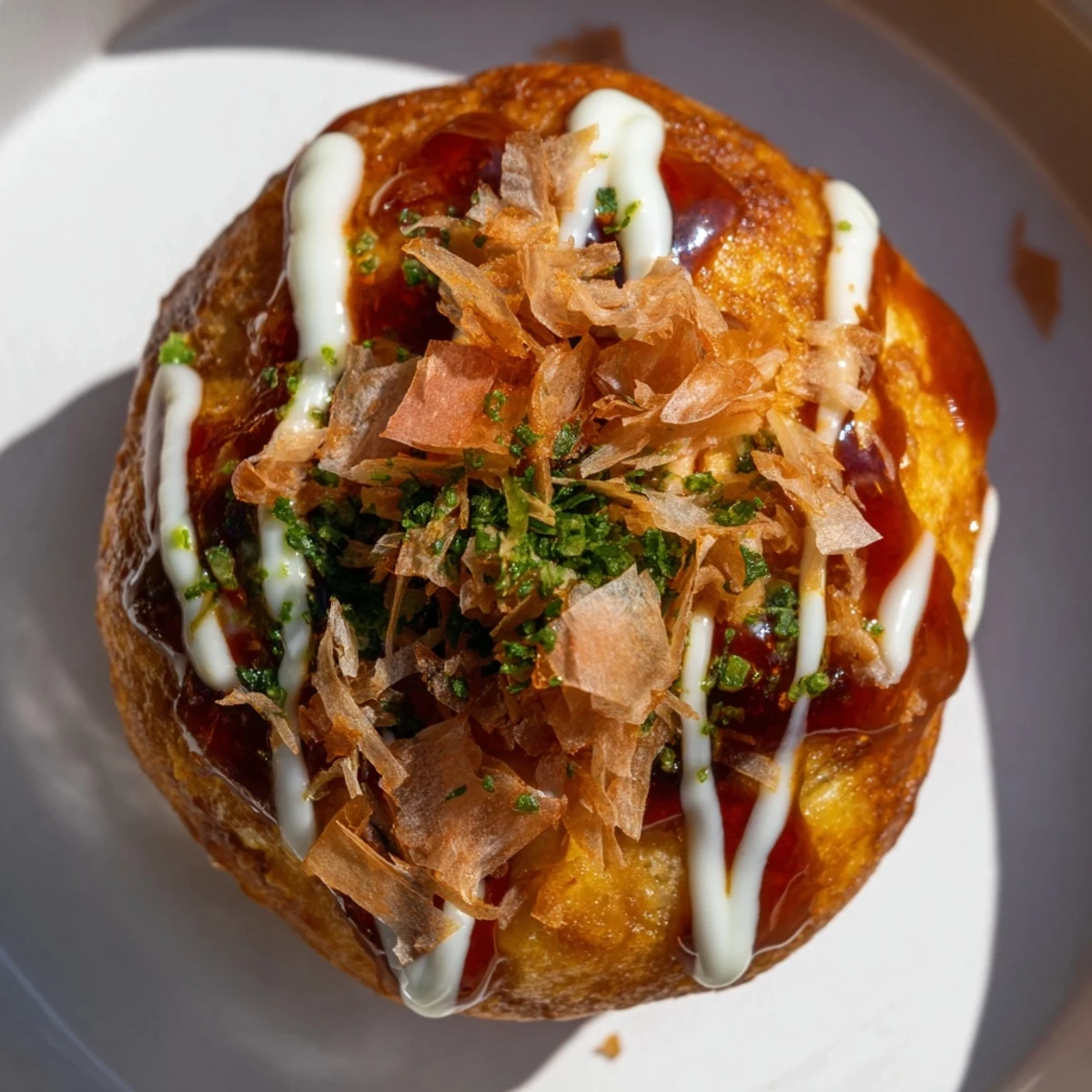
- Once theyre evenly browned and feel set when prodded, transfer them to a plate and drizzle generously with sauce and mayo
- The final touches:
- Sprinkle with aonori and top with bonito flakes, watching them curl and dance on the hot surface
 Bookmark
 My friend Akiko told me that in Osaka, street vendors work with such practiced rhythm it looks like a dance, their hands blurring as they turn dozens of balls simultaneously. After making these probably fifty times, I finally understand that muscle memory, that moment where your hands just know when to turn without you even thinking about it. Theres something deeply satisfying about getting into that flow state, producing plate after plate of perfect golden spheres while your friends hover around waiting for their share.
The Art of the Turn
Mastering the takoyaki turn takes practice, but the secret is using two skewers like chopsticks rather than trying to spear the balls. Gentle leverage works better than force, and if some batter spills out, just tuck it back in as you keep rotating. The more you make them, the more youll develop that intuition for exactly when each ball is ready to be moved.
Pan Alternatives
Ive experimented with aebleskiver pans and even cake pop makers when I couldnt find my takoyaki pan, and while they work, the shape and heat distribution are never quite right. The traditional pan has those perfectly sized half spheres that create the ideal ratio of crispy exterior to soft interior, so its worth investing in the real thing if you plan to make these regularly.
Serving Strategy
Takoyaki are at their absolute best the moment they come off the pan, that contrast between the hot soft inside and crisp exterior is magical. I like to set up a little assembly line where people can customize their own toppings and eat them immediately while I work on the next batch.
- Have all your toppings prepped and ready before you start cooking
- Small plates work better than big ones so everyone can grab fresh ones easily
- Keep the pan going steadily because these disappear faster than you can make them
 Bookmark
 Theres something about standing over a hot takoyaki pan, surrounded by friends and family, that makes any evening feel like a celebration. These little golden balls have this magical way of bringing people together, turning a simple dinner into a memorable gathering filled with laughter and delicious food.
Recipe FAQs
- → What can I use if I don't have a takoyaki pan?
-
An aebleskiver pan or cake pop maker works well as substitutes. Both have similar rounded wells that can produce the spherical shape, though the traditional pan yields the most authentic results.
- → Can I make the batter ahead of time?
-
Yes, the batter can be prepared a few hours in advance and stored in the refrigerator. Give it a quick whisk before using, as the flour may settle slightly during resting time.
- → How do I achieve the perfect round shape?
-
The key is patience and timing. Wait until the edges set before turning, then rotate each ball in small increments—about 90 degrees at a time—allowing the uncooked batter to flow out and gradually form the round shape as it cooks.
- → What toppings are essential for authentic flavor?
-
The classic quartet includes takoyaki sauce (or a Worcestershire-ketchup blend), Japanese mayonnaise in a zigzag pattern, aonori (dried green seaweed), and katsuobushi (bonito flakes) which add smoky umami depth.
- → Can I freeze takoyaki for later?
-
Freshly made takoyaki freezes well. Place cooled balls on a baking sheet until frozen solid, then transfer to an airtight container. Reheat in a 350°F oven for 8-10 minutes to restore crispness.
