
 Bookmark
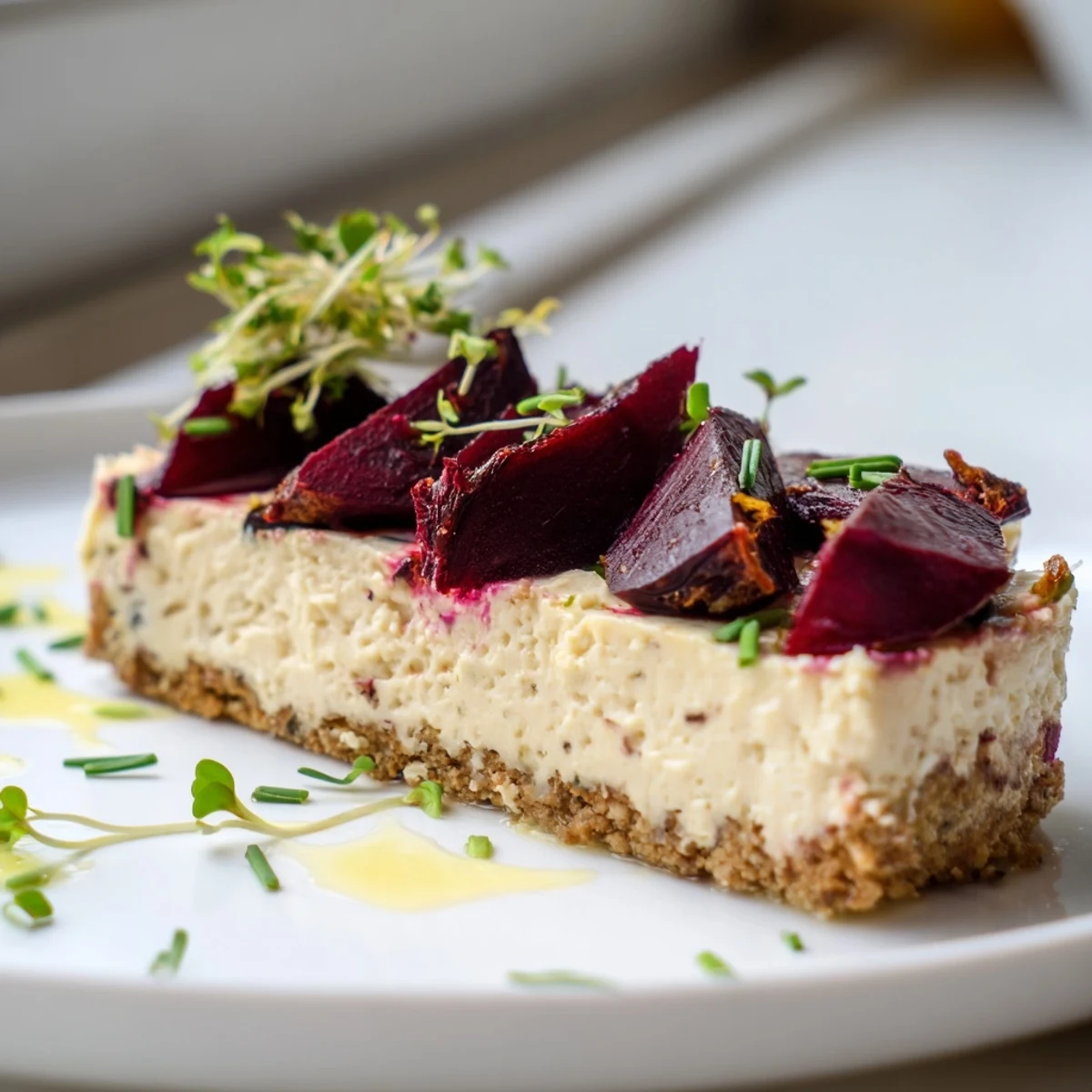
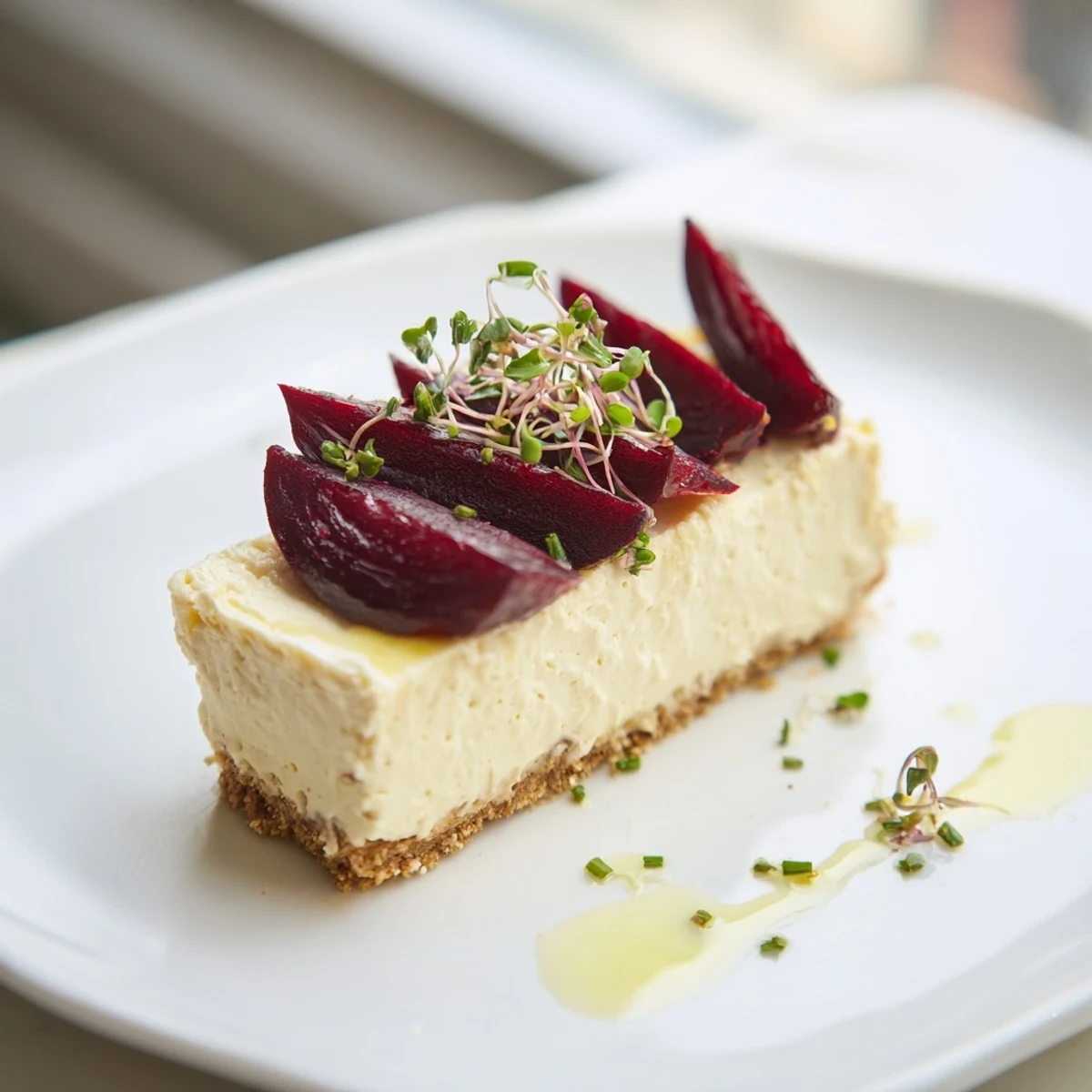
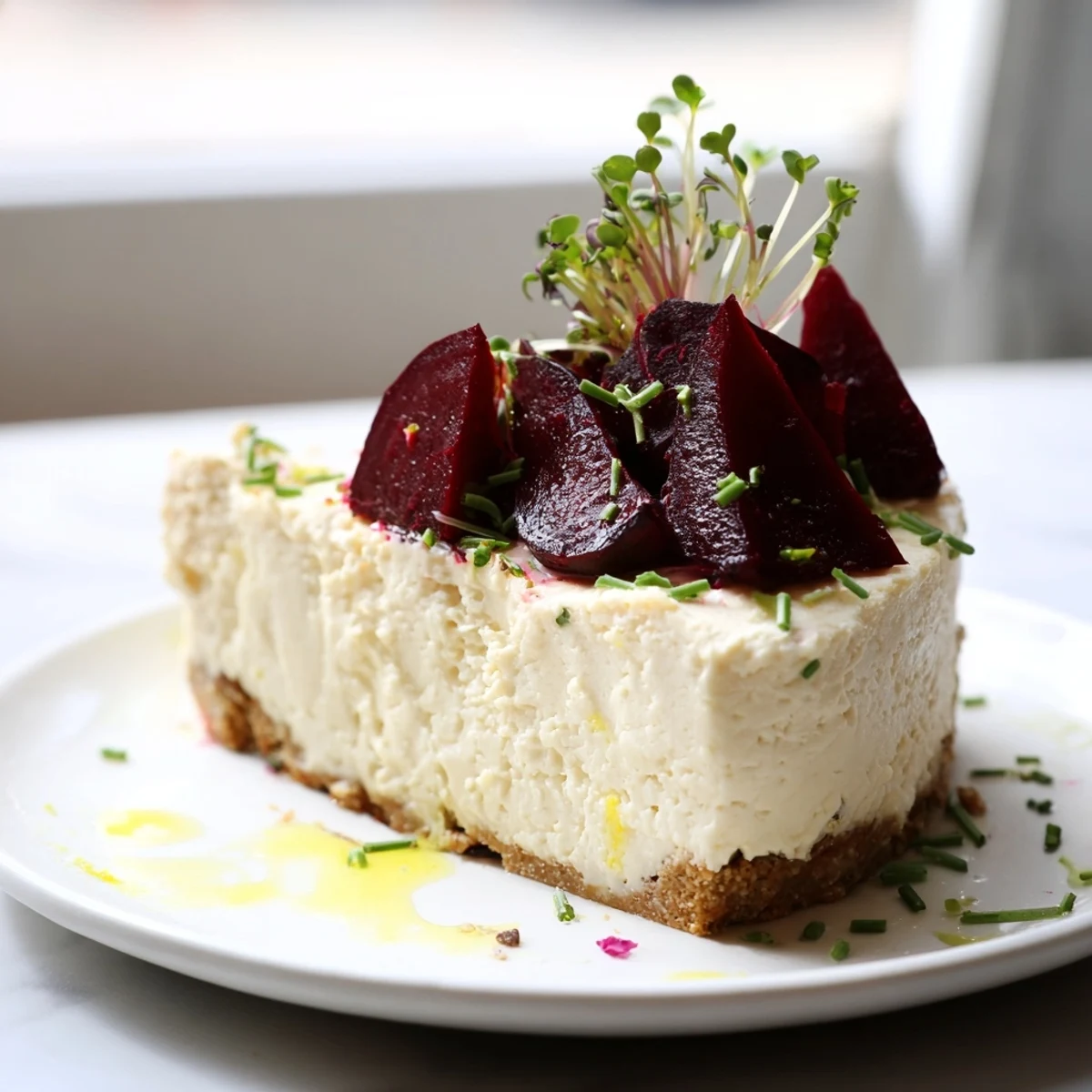
 This modern European appetizer combines a rich, creamy cheesecake base made with cream cheese, ricotta, and aged cheddar or Gruyère. The wholemeal cracker crust provides a satisfying crunch, while fresh thyme and lemon zest add bright herbal notes. Sweet roasted beetroot wedges, caramelized with balsamic vinegar, create a beautiful contrast against the savoury filling. Finished with delicate microgreens, chives, and a drizzle of olive oil, this dish serves six and requires just 30 minutes of active preparation time.
The first time I served this at a dinner party, my guests looked genuinely confused when I carried out a cheesecake that smelled like herbs and cheese rather than berries and sugar. Watching their expressions shift from uncertainty to delight after that first surprising bite remains one of my favorite kitchen moments. Now it is the appetizer everyone actually requests by name.
I made this last autumn for a friend who swore she hated beetroot in any form. She took a tiny polite slice, then went back for seconds, then actually asked if there was any left to take home. Sometimes the most unexpected combinations end up being the ones that stick around permanently in your cooking rotation.
Ingredients
- 150 g wholemeal crackers: These provide a sturdy, slightly nutty foundation that holds up well to the creamy filling without becoming soggy
- 60 g unsalted butter: Melt this completely and let it cool slightly before mixing for the most even crust distribution
- 1/2 tsp sea salt: This small amount in the crust creates a perfect base layer of seasoning
- 400 g cream cheese: Absolutely must be room temperature or you will end up with lumps in your filling no matter how much you mix
- 200 g ricotta cheese: This lighter cheese keeps the filling from becoming too dense and heavy
- 100 g grated mature cheddar or Gruyère: The aged cheese brings a deep, savory note that makes this unmistakably a main course cheesecake
- 2 large eggs: Add these one at a time and really let each incorporate fully before adding the next
- 1 tablespoon fresh thyme leaves: Strip these from the stems and chop them just before adding for the most aromatic result
- Zest of 1 lemon: Use a microplane if you have one to get just the bright yellow outer layer without any bitter pith
- 3 medium beetroots: Peel these carefully and cut them into uniform wedges so they all roast at the same rate
- 2 tbsp olive oil: A good quality extra virgin oil here makes a noticeable difference in the roasted beetroot flavor
- 1 tbsp balsamic vinegar: This helps the beetroot caramelize and adds a lovely subtle sweetness
Instructions
- Prepare your pan and preheat the oven:
- Set your oven to 180°C (350°F) and line a 20 cm springform pan with parchment paper, making sure to grease the sides well.
- Build the crust foundation:
- Pulse the crackers into fine crumbs, then stir in the melted butter and salt until the mixture resembles wet sand.
- Press and bake the crust:
- Firmly press the crumb mixture into the bottom of your prepared pan, using the bottom of a measuring cup to create an even layer, then bake for 10 minutes.
- Blend the cheese base:
- In a large bowl, beat the cream cheese, ricotta, and grated cheese until completely smooth and no lumps remain.
- Add the eggs:
- Crack in the eggs one at a time, beating thoroughly after each addition and scraping down the sides of the bowl to ensure everything is incorporated.
- Season the filling:
- Fold in the fresh thyme, lemon zest, pepper, and salt until just combined.
- Fill and bake:
- Pour the filling over your cooled crust, smooth the top, and bake for 40 to 45 minutes until the center is set with just a slight wobble.
- Chill thoroughly:
- Let the cheesecake cool to room temperature, then refrigerate for at least 2 hours though overnight is even better.
- Roast the beetroots:
- Toss the beetroot wedges with olive oil, balsamic vinegar, salt, and pepper, then spread them on a roasting tray and bake at 200°C (400°F) for 30 to 35 minutes until tender and caramelized.
- Assemble and serve:
- Release the cheesecake from the pan, arrange the roasted beetroot wedges on top, scatter with fresh chives and microgreens, and finish with a generous drizzle of olive oil.
 Bookmark
 This has become my go-to dish for those nights when you want something that feels special but does not require standing over the stove while guests arrive. The red beetroot against the pale cheese always draws people into the kitchen wondering what you are making.
Make Ahead Magic
The cheesecake actually improves after a night in the fridge, giving the flavors time to meld and the texture to become even creamier. I often bake it the day before and just roast the beetroots while the oven heats up for serving.
Playing With Flavors
Sometimes I swap in goat cheese for half the cheddar when I want something tangier and brighter. Fresh basil works beautifully instead of thyme in summer, and toasted walnuts scattered over the top add a lovely crunch.
Serving Suggestions
This cheesecake works as a starter with just a simple green salad on the side. For a light lunch, pair it with some crusty bread and maybe a few olives. The wine pairings are forgiving too.
- A crisp Sauvignon Blanc cuts through the richness beautifully
- A light Pinot Grigio works if you prefer something more subtle
- Rosé makes a lovely summer option that bridges both flavors
 Bookmark
 There is something deeply satisfying about serving a dish that makes people reconsider what a cheesecake can be. Enjoy watching those first curious bites turn into genuine delight.
Recipe FAQs
- → Can I make this cheesecake ahead of time?
-
Yes, this cheesecake actually benefits from being made ahead. It needs to chill for at least 2 hours, but preferably overnight. The flavors develop beautifully and the texture becomes more firm and sliceable.
- → What can I use instead of ricotta?
-
You can substitute ricotta with cottage cheese blended until smooth, or use additional cream cheese. For a tangier variation, goat cheese works wonderfully and pairs exceptionally well with the earthy beetroot.
- → Is this cheesecake served hot or cold?
-
This cheesecake is typically served chilled or at room temperature. The roasted beetroot can be served slightly warm, which creates a lovely temperature contrast. Avoid serving it hot, as the texture becomes too soft.
- → How do I know when the cheesecake is done baking?
-
The cheesecake is ready when the edges are set but the center still has a slight wobble when gently shaken. It will continue to firm up as it cools. Overbaking causes cracking and a dry texture.
- → Can I use golden beetroots instead?
-
Absolutely. Golden beetroots work beautifully and create a striking visual presentation. Their flavor is slightly milder and sweeter than red beetroots, which complements the creamy filling perfectly.
- → What wine pairs well with this dish?
-
A crisp Sauvignon Blanc or Pinot Gris pairs excellently, cutting through the rich creaminess. For red wine lovers, a light Pinot Noir works well without overpowering the delicate flavors.
