
 Bookmark
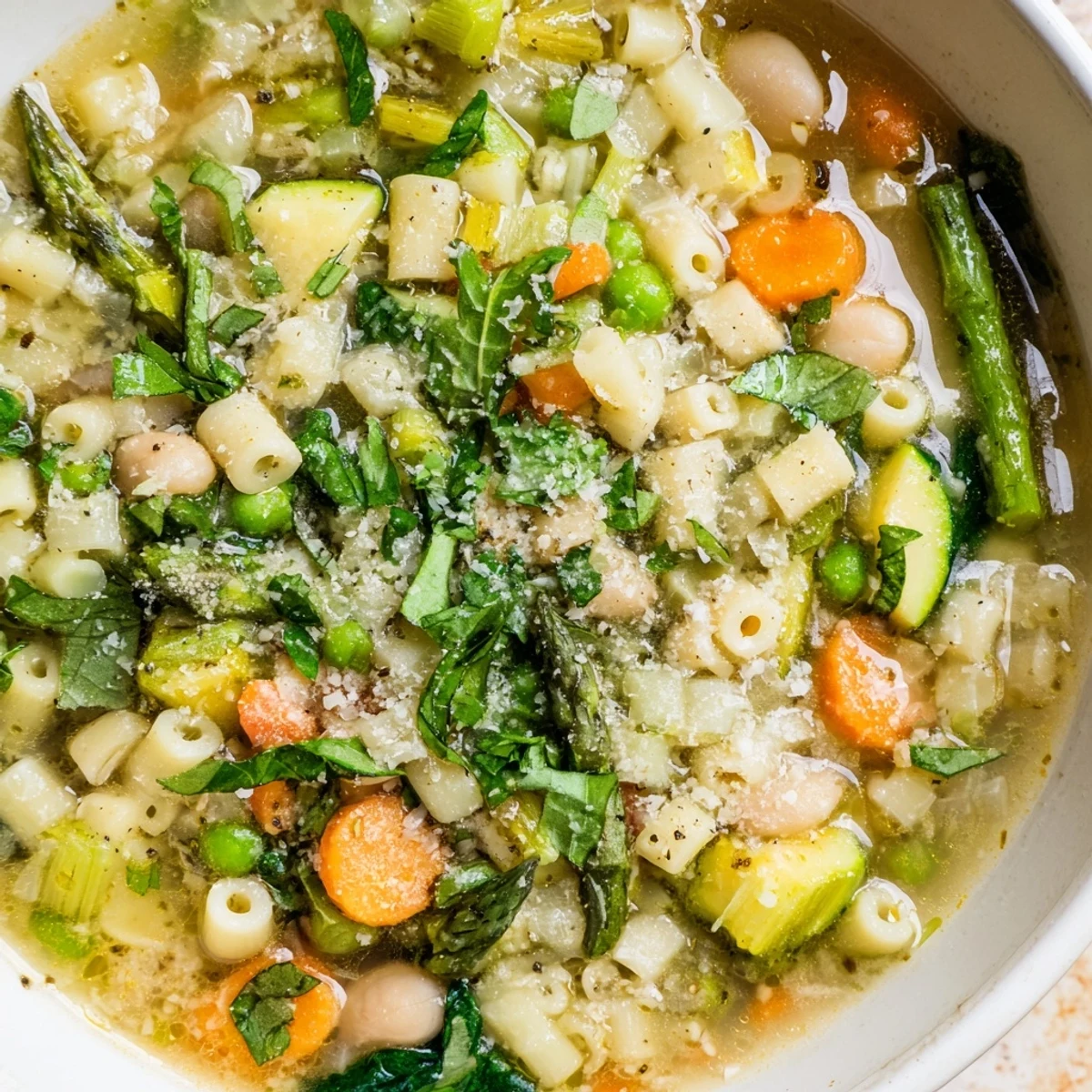
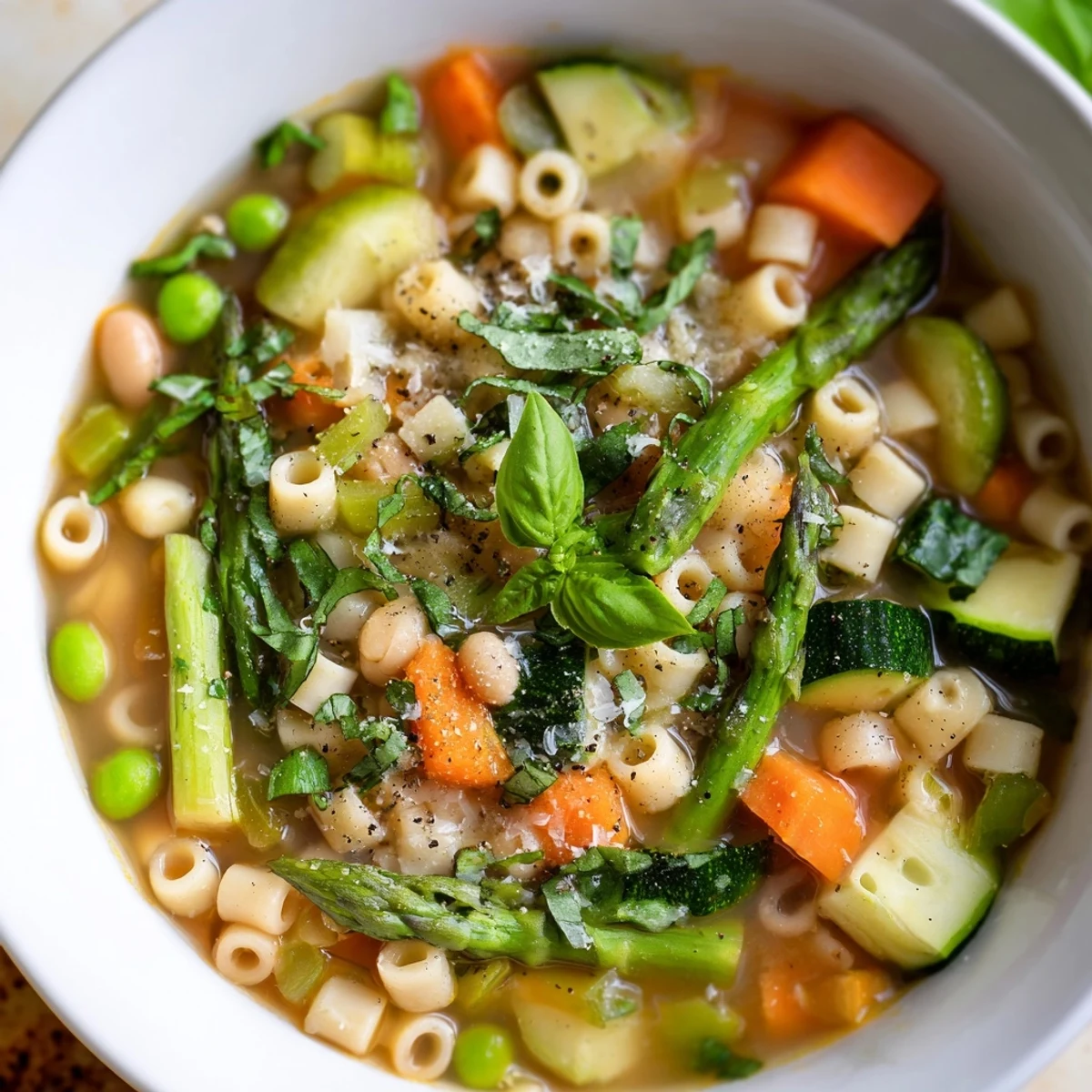
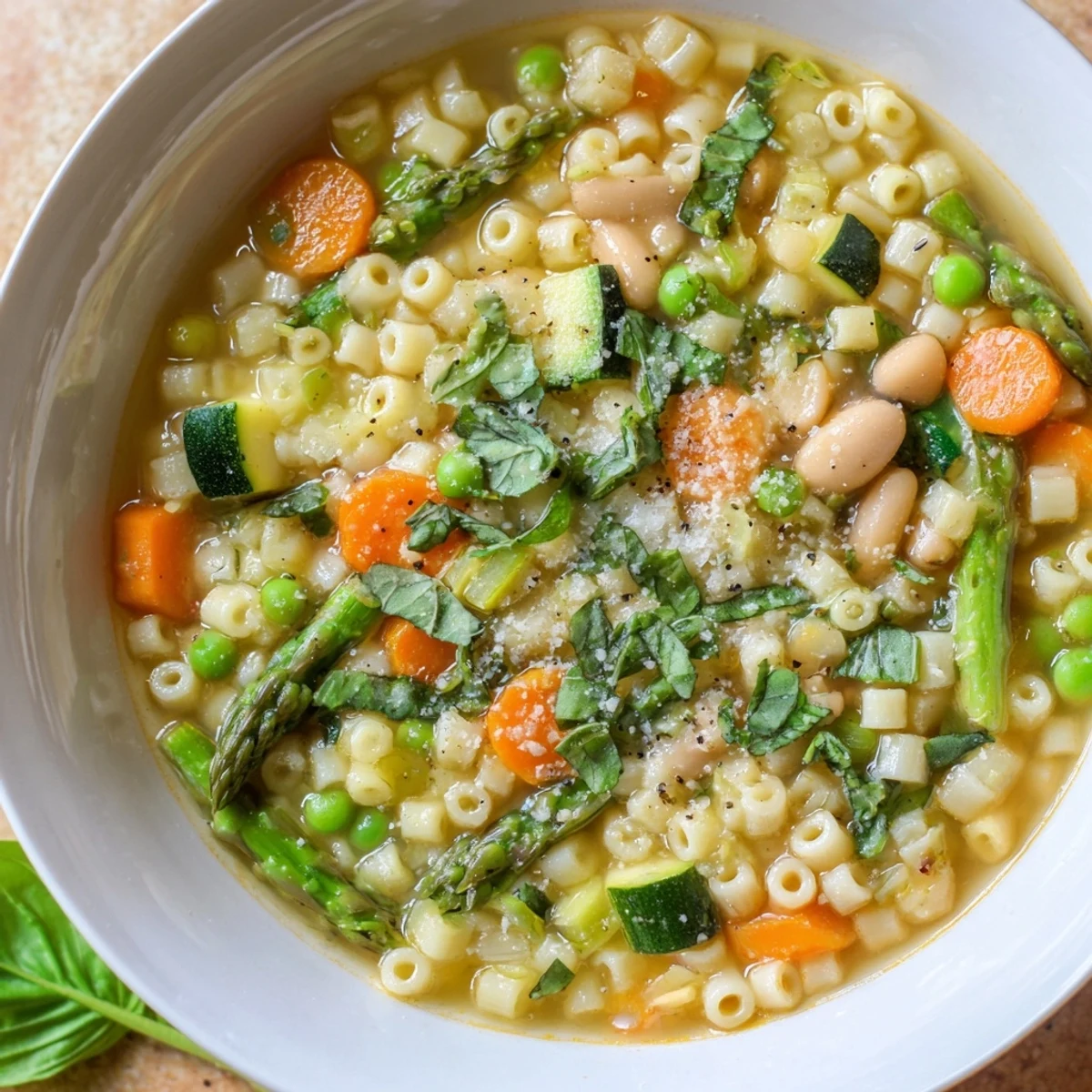
 This spring minestrone brings together asparagus, zucchini, peas, and baby spinach in a savory vegetable broth with cannellini beans and small pasta. Finished with fresh basil, parsley, and a bright squeeze of lemon juice, it comes together in just 45 minutes. The result is a nourishing, vegetarian Italian soup that celebrates seasonal produce at its peak. Serve with crusty bread and a glass of Pinot Grigio for a complete, effortless meal.
There was a Saturday in late April when the farmers market suddenly looked like a different place, tables overflowing with thin asparagus and sugar snap peas, and I came home with more vegetables than any reasonable person needed. I started chopping without a plan, and what ended up in the pot was the closest thing to spring I could put on a spoon.
I made a big batch for my neighbor who had just come home from a long trip, and she stood in my kitchen eating it straight from the ladle before I could even find a bowl. That pretty much told me everything I needed to know about whether the recipe was worth keeping.
Ingredients
- Olive oil: This is your flavor foundation so do not grab the cheap stuff from the back of the pantry, use something you would drizzle on bread
- Onion: Getting it finely chopped means it melts into the broth instead of leaving chunky surprises in every spoonful
- Garlic: Two cloves is the sweet spot where you get aroma without it overpowering the delicate vegetables
- Carrots: Dicing them small helps them cook at the same rate as everything else so nothing turns mushy
- Asparagus: Cut into one inch pieces and snap off the woody ends first because those will never soften no matter how long you simmer
- Zucchini: Dice it roughly the same size as the carrots so the soup looks intentional on the plate
- Peas: Fresh peas are a revelation if you can find them but frozen work beautifully and actually hold their color better
- Baby spinach: Added at the very end so it just wilts and stays bright green instead of turning into murky swamp stuff
- Vegetable broth: A good quality broth makes or breaks this so taste it before you pour it in and switch brands if it tastes flat
- Cannellini beans: Rinsing them thoroughly removes that canned starchy liquid that can make the soup cloudy
- Small pasta: Ditalini is traditional but orzo works great, just avoid anything larger than bite size
- Salt and pepper: Season in layers throughout cooking rather than dumping it all in at the end
- Fresh basil and parsley: Do not even think about using dried versions here because the fresh herbs are half the reason this soup tastes like spring
- Lemon juice: Added off the heat so the acidity stays bright and does not cook away into nothing
- Parmigiano Reggiano: Optional but honestly it takes the soup from lovely to the kind of thing you crave on rainy evenings
Instructions
- Build the base:
- Heat the olive oil in a large pot over medium heat and add the chopped onion, letting it soften for about three minutes until it turns translucent and your kitchen starts to smell like something good is happening.
- Add the aromatics:
- Stir in the minced garlic and diced carrots, cooking for two to three minutes until the garlic becomes fragrant and the carrots just start to soften at the edges.
- Bring in the spring vegetables:
- Add the asparagus, zucchini, and peas, stirring occasionally for another two minutes so everything gets coated in that flavored oil.
- Simmer with broth and beans:
- Pour in the vegetable broth and bring it to a boil, then add the cannellini beans and pasta, reducing the heat to a gentle simmer with the lid on for eight to ten minutes until the pasta is tender.
- Wilt in the greens and herbs:
- Stir in the baby spinach, chopped basil, and parsley, cooking just one to two minutes until the spinach collapses into bright green ribbons.
- Finish with brightness:
- Remove the pot from heat, stir in the lemon juice, and taste for salt and pepper, adjusting until the broth sings on your tongue.
- Serve with love:
- Ladle into warm bowls and pass the Parmigiano Reggiano at the table so everyone can add as much or as little as they want.
 Bookmark
 My mother in law, who is not easily impressed by vegetables, asked for the recipe after one bowl and then made it three times in one week. That felt like a small victory for spring produce everywhere.
Picking the Right Vegetables
The beauty of this soup is its flexibility with whatever looks best at the market. I have swapped in fava beans when I found them, used leeks instead of onion when I had them sitting around, and even tossed in green beans when asparagus was not available. The rule is simple: if it is green and in season, it probably belongs in the pot.
Broth Makes the Difference
I used to think all vegetable broths were basically the same until I did a side by side taste test one afternoon out of curiosity. The difference between a mass produced broth and a well made one was shocking, and it completely changed how this soup tasted. If your broth tastes dull on its own, the soup will taste dull no matter how many fresh herbs you add.
Making It a Full Meal
This soup is satisfying on its own but becomes something really special with a few simple additions on the side. A hunk of crusty sourdough for dipping turns it into dinner, and a glass of cold Pinot Grigio makes the whole thing feel like a proper Italian meal.
- Toast thick slices of bread with a rub of garlic and a drizzle of olive oil for the perfect dipping companion
- If you want more protein, a soft poached egg dropped right into the hot bowl is incredible
- Make a double batch because the leftovers taste even better the next day after the flavors settle
 Bookmark
 Spring comes and goes fast, but this soup is one way to hold onto it for at least one more evening at the table.
Recipe FAQs
- → Can I make this soup ahead of time?
-
Yes, the flavors actually improve after resting. Store in the fridge for up to 3 days, though the pasta may soften. Add fresh herbs and lemon juice just before serving.
- → What pasta works best in minestrone?
-
Small shapes like ditalini, orzo, or small shells are ideal because they fit neatly on a spoon. Any short pasta you have on hand will work well.
- → Can I use frozen vegetables instead of fresh?
-
Absolutely. Frozen peas work perfectly, and frozen asparagus or green beans can substitute for fresh ones. Add them directly without thawing.
- → How do I make this vegan?
-
Simply skip the Parmigiano Reggiano garnish or replace it with a plant-based cheese alternative. The soup base is already fully vegan.
- → What other spring vegetables can I add?
-
Fava beans, green beans, leeks, or even diced radishes work beautifully. Feel free to mix and match based on what looks fresh at the market.
