
 Bookmark
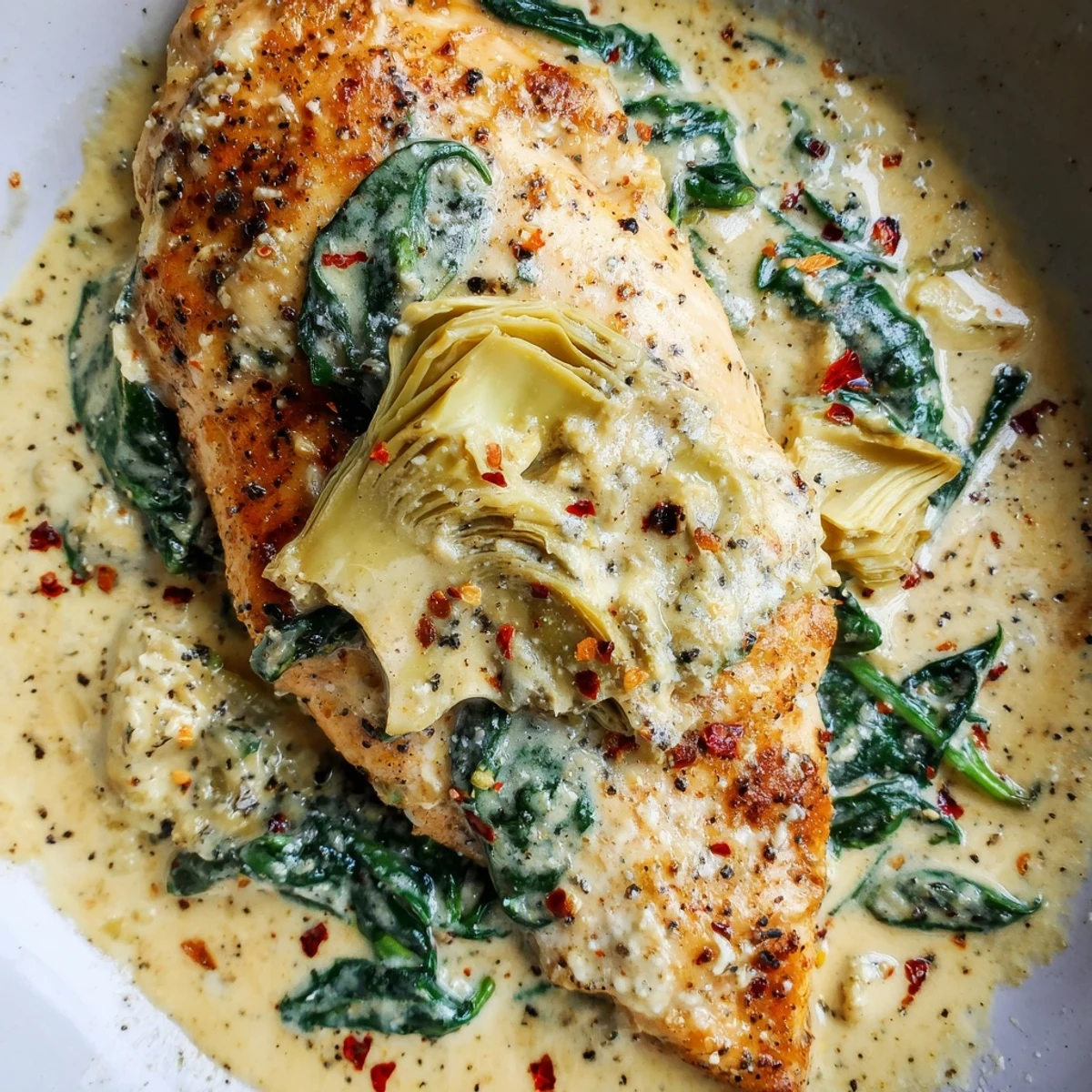
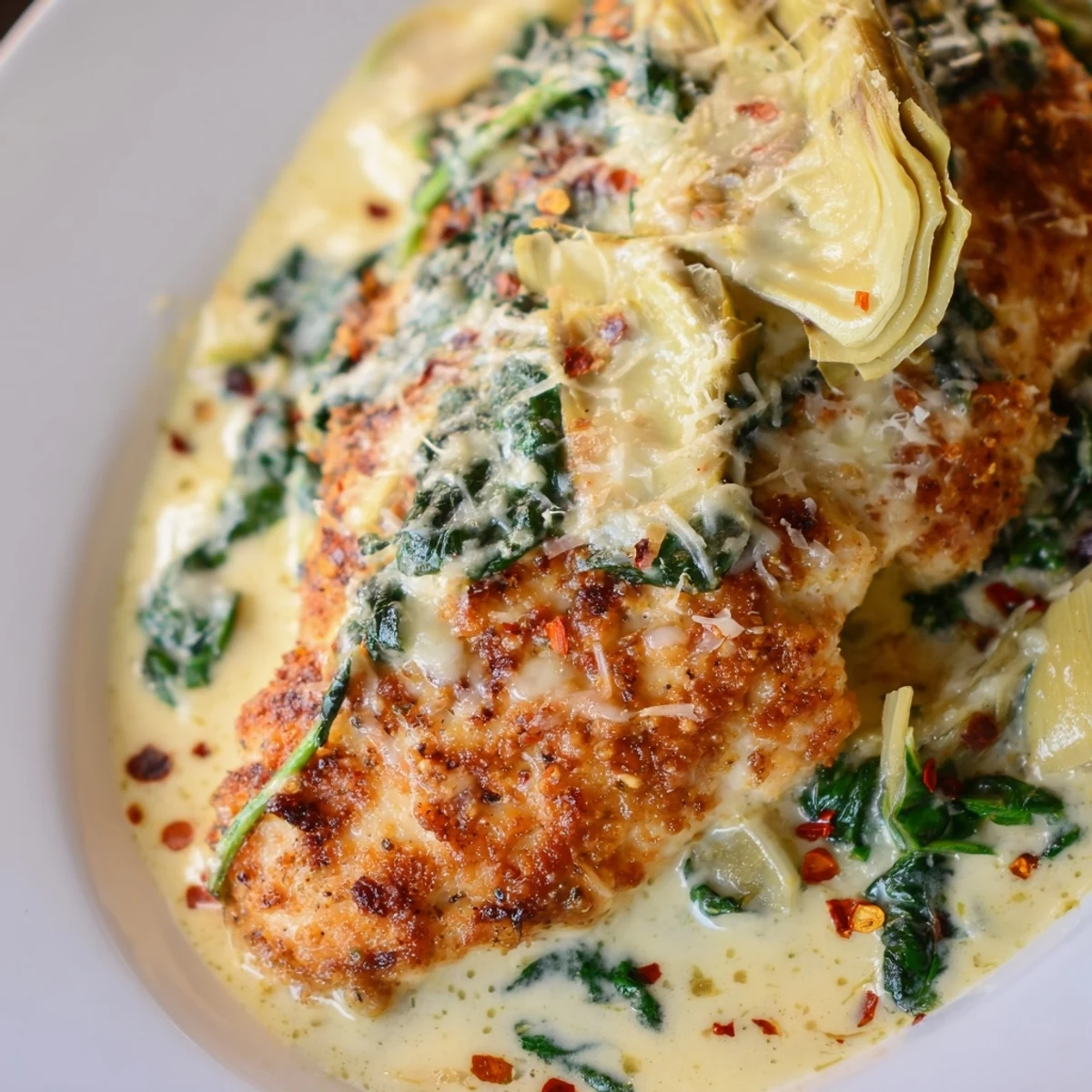
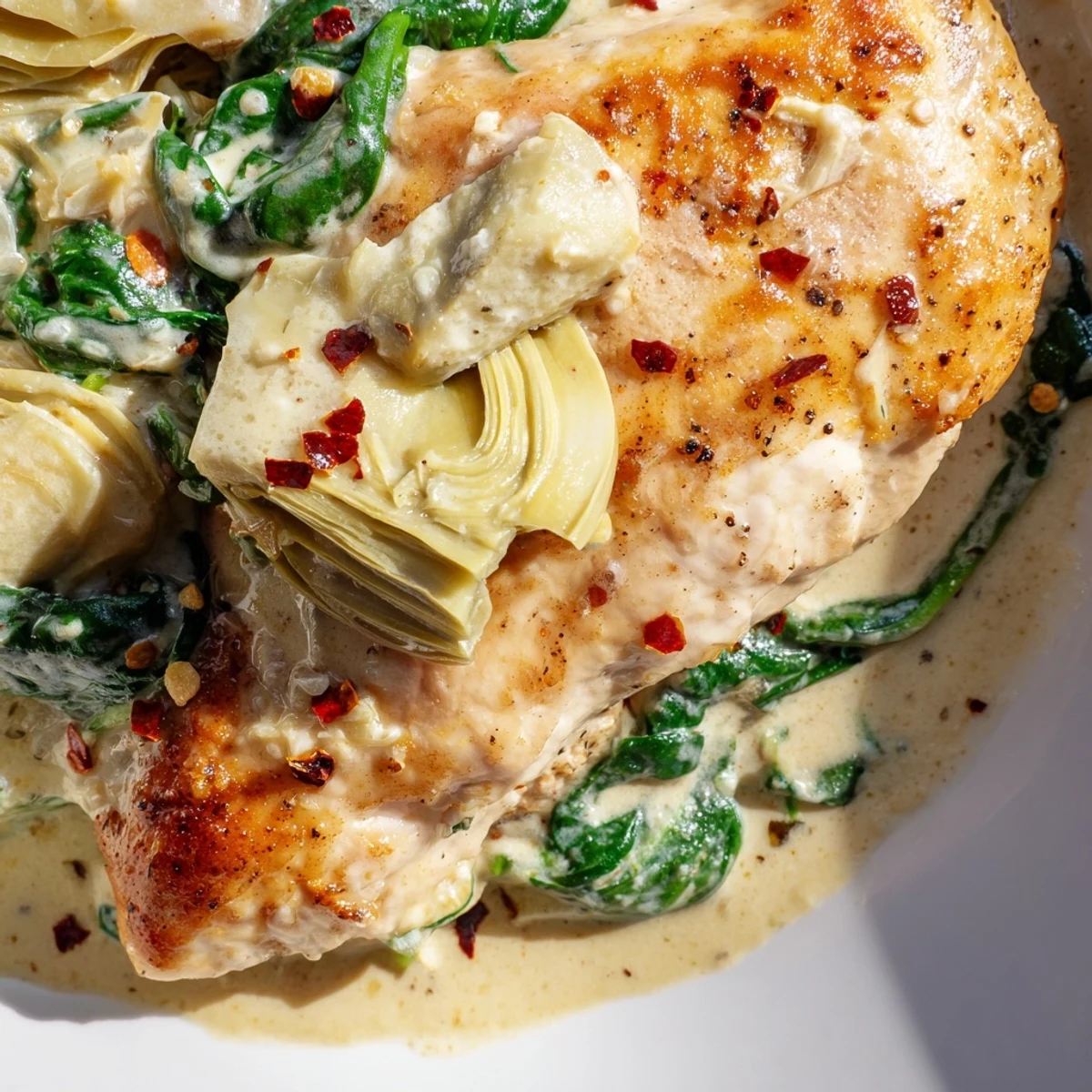
 This dish features tender chicken breasts cooked in a rich, garlicky cream sauce enhanced with fresh baby spinach and artichoke hearts. The sauce blends heavy cream, Parmesan, and Italian seasonings to create a smooth, flavorful base. Searing the chicken before simmering ensures juicy, well-seasoned meat. Quick to prepare, this skillet meal suits busy nights and offers comforting, wholesome flavors. Garnishing with extra Parmesan adds a savory finish.
There's something almost magical about the moment when a plain chicken breast transforms into something creamy and luxurious right before your eyes. One weeknight, I was staring at my pantry, tired of the same old routine, when the combination of spinach, artichokes, and cream just clicked—like an old friend reminding me why I fell in love with cooking in the first place. This skillet became my go-to when I needed something that tasted special but didn't demand hours in the kitchen. Now it's the dish I make when I want to feel like I've done something meaningful for dinner.
I made this for my partner on a rainy Thursday night, and watching their face light up at that first bite was exactly what I needed that week. The creamy sauce clung to everything in the best way, and somehow the simplicity of chicken, spinach, and artichokes felt like comfort personified. That meal turned into a conversation about all the weeknight dinners we'd been too tired to attempt, and suddenly this became our new standard.
Ingredients
- Boneless, skinless chicken breasts: Look for breasts that are roughly the same thickness so they cook evenly—I gently pound mine to an even ¾-inch thickness when they're uneven.
- Kosher salt and freshly ground black pepper: These aren't just seasonings; they're the foundation that makes the chicken taste like itself, amplified.
- Olive oil: Use a good quality oil here since it's doing the heavy lifting of getting your chicken golden and gorgeous.
- Garlic: Minced fresh garlic is non-negotiable—the aroma that fills your kitchen in those first 30 seconds is part of the whole experience.
- Fresh baby spinach: It wilts down dramatically, so don't be intimidated by the four cups—it becomes almost delicate in the sauce.
- Canned artichoke hearts: Drain them well and quarter them; this keeps them from overwhelming the plate while their subtle nuttiness weaves through every bite.
- Heavy cream: This is what makes the sauce silky and forgiving—it's also what makes you feel like you're treating yourself on an ordinary Tuesday.
- Chicken broth: Low-sodium broth lets you control the salt level and keeps the sauce from becoming overwhelming.
- Parmesan cheese: Freshly grated Parmesan melts faster and tastes infinitely better than the pre-shredded kind.
- Dried Italian seasoning: A pinch brings herbaceous notes that tie everything together without fussiness.
- Crushed red pepper flakes: Optional, but a tiny amount adds a whisper of heat that makes people ask what the secret ingredient is.
Instructions
- Season and sear your chicken:
- Pat the chicken breasts dry with paper towels—this small step makes all the difference in getting that beautiful golden crust. Season generously on both sides, then let them sit for a minute while your skillet heats so the oil is shimmering and ready to work.
- Build your golden foundation:
- When the chicken hits the oil, resist the urge to move it around; let it sit for four to five minutes until you hear that gentle sizzle turn into a confident crackle. Flip once, cook the other side the same way, then set it aside on a plate and tent loosely with foil to keep it warm.
- Coax out the garlic's perfume:
- Lower the heat slightly and add your minced garlic to the same skillet—you'll hear it start to speak, which is your cue to keep stirring so it doesn't catch and turn bitter. The moment it becomes fragrant, move forward; don't wait.
- Wilt the spinach into submission:
- Add all four cups of spinach at once and stir constantly for about two minutes as it transforms from leafy and defiant into soft and yielding. This is faster than you think, and that's the whole point.
- Welcome the artichokes:
- Stir in your drained, quartered artichoke hearts and let them warm through for a minute so they're no longer cold against the other ingredients.
- Create the creamy foundation:
- Pour in the heavy cream and chicken broth slowly, stirring as you go so everything melds rather than splashes. You're building something luxurious here.
- Bring it to a gentle simmer:
- Let the liquid come to a soft bubble, then immediately sprinkle in the Parmesan, Italian seasoning, and red pepper flakes if you're using them. Stir constantly for about three minutes as the cheese melts and the sauce thickens just slightly—it should coat the back of a spoon but still feel loose and graceful.
- Reunite the chicken with the sauce:
- Gently nestle your seared chicken breasts back into the skillet, spooning that creamy sauce over the top so it gets reacquainted with all that flavor. Let it simmer gently for two to three minutes until everything is heated through and you've created something whole.
 Bookmark
 The night I realized this dish was more than just dinner was when my daughter asked to help cook it with me, and suddenly we were laughing about how the spinach seemed to disappear, and she was holding the spoon to taste the sauce with the kind of focus usually reserved for important ceremonies. Food has a way of creating these small moments that stick with you.
Why This Skillet Became Our Weeknight Savior
There's a specific kind of exhaustion that comes with working all day, and it's the kind that makes the thought of cooking feel impossible—until you remember that this entire meal exists in one pan and takes less time than ordering takeout. The beauty of a skillet meal is that nothing gets hidden in pots or buried under other dishes; everything happens right there where you can see it, smell it, and adjust it in real time. Once you've made it twice, your hands know what to do, and your mind gets to wander while you cook.
Flexibility Without Losing the Soul
This recipe has a beautiful flexibility that doesn't require you to apologize for any substitutions you make. If half-and-half is what's in your fridge, use it—the sauce will be lighter and a touch less rich, but no less delicious. Some nights I add sun-dried tomatoes because I'm feeling it, or a handful of fresh basil at the very end because I have it on my counter. The core of this dish—tender chicken, creamy sauce, those subtle greens and vegetables—is sturdy enough to welcome your own small additions without falling apart.
What to Serve It With, And Why It Matters
The first time I served this over pasta, I understood why that pairing has endured for generations—the sauce clings to every noodle, and you get creaminess in every bite. But then I tried it over cauliflower rice for a quieter, more grounded meal, and realized this dish works in both directions without pretending to be something it's not. For a truly minimal carb approach, serve it as-is in a shallow bowl with extra Parmesan, letting the creamy sauce do all the talking.
- Over pasta, this becomes a traditional comfort meal that tastes like someone's grandmother knew what she was doing.
- With cauliflower rice or zucchini noodles, it becomes a lighter option that still feels indulgent and complete.
- Eaten straight from the skillet with a piece of good bread for soaking up sauce is honestly the way I prefer it on nights when I'm not pretending to have things figured out.
 Bookmark
 This meal has become the thing I reach for when I want to feel competent and generous without spending my whole evening in the kitchen. It's honest food that asks you to show up and pay attention without demanding perfection.
Recipe FAQs
- → Can I use frozen spinach instead of fresh?
-
Frozen spinach can be used but should be thawed and drained well to avoid excess moisture in the sauce and maintain its creamy texture.
- → Is there a substitute for heavy cream?
-
Half-and-half or a mixture of milk and cream cheese can lighten the sauce while still providing creaminess.
- → How do I know when the chicken is cooked through?
-
Cook chicken until juices run clear and internal temperature reaches 165°F (75°C) to ensure tenderness and safety.
- → Can this be prepared ahead of time?
-
Yes, components can be prepared in advance; reheat gently to preserve the sauce's creamy consistency before serving.
- → What side dishes complement this meal?
-
Cauliflower rice, steamed vegetables, or pasta pair well, balancing the richness of the sauce.
