
 Bookmark
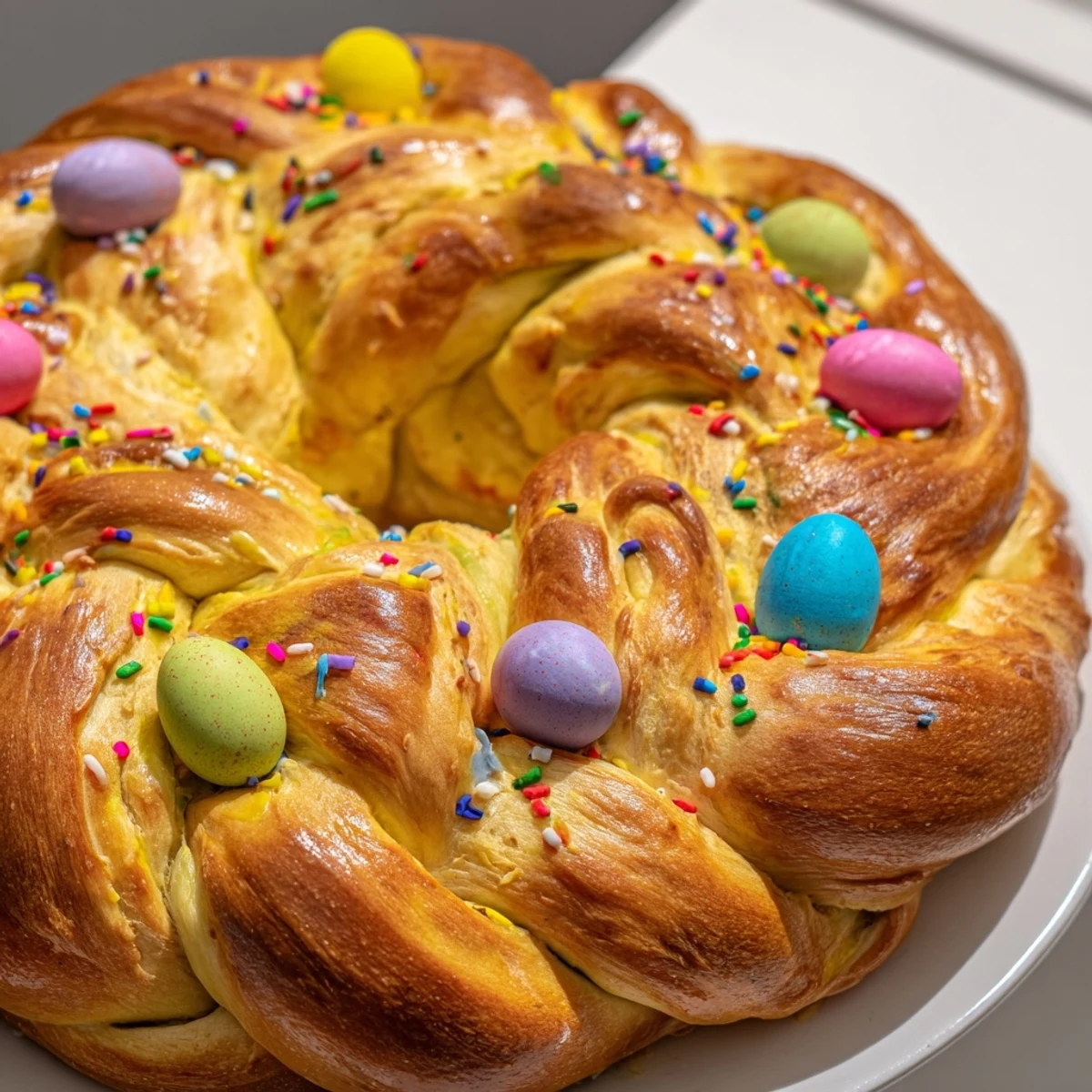
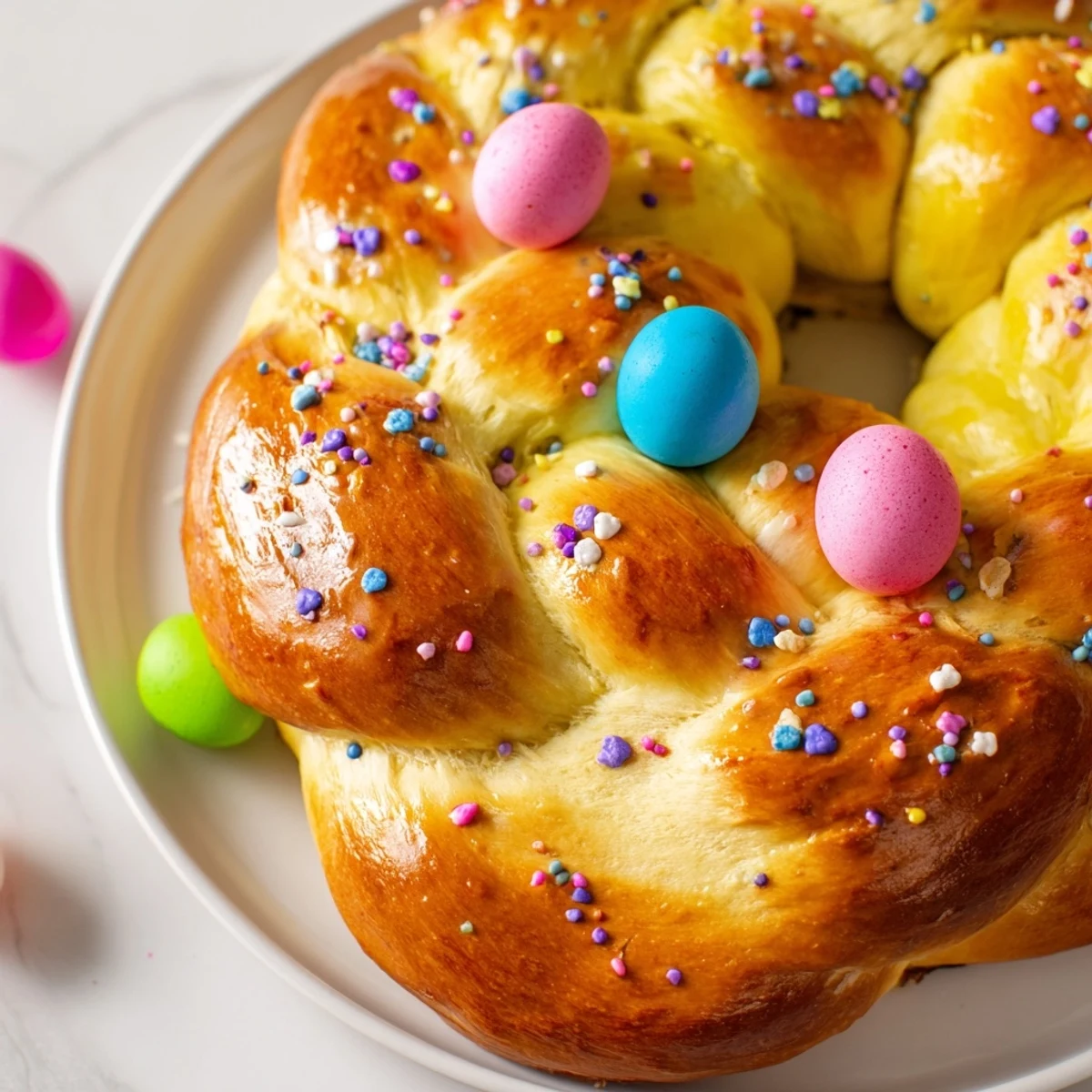
 This festive bread features a soft, brioche-style dough braided to encase vibrantly dyed eggs. The dough combines warm milk, butter, and a hint of vanilla to create a tender crumb with a subtle sweetness. After rising, the dough is divided and braided around colored eggs, then baked until golden. The result is a visually stunning centerpiece that offers a delicate balance of soft texture and festive flair, perfect for spring gatherings or holiday tables.
Optional touches like lemon zest and colored sprinkles enhance both aroma and presentation. Enjoy with butter or sweet preserves for a delightful treat.
The purple dye bled onto my thumb the year I insisted on making lavender eggs, and I walked around for three days looking like I had been fingerprinted at some strange culinary crime scene. My neighbor knocked on the door that Saturday morning, caught the smell of yeast and sugar drifting through the hallway, and invited herself to stay. We braided dough at my tiny kitchen table while her toddler tried to hide plastic eggs in my houseplants.
I once made four loaves for an office potluck and watched a grown man in accounting carry an entire braid back to his desk like a trophy. He ate nothing else that afternoon, just pulled off soft pieces and dipped them in coffee while spreadsheets waited.
Ingredients
- All-purpose flour: The backbone that gives this bread its tender crumb without heaviness; spoon and level rather than scooping straight from the bag.
- Granulated sugar: Just enough sweetness to feel celebratory without crossing into dessert territory.
- Active dry yeast: Proof it properly and wait for that foamy bloom; rushing this step has given me doorstops instead of bread.
- Salt: The quiet essential that keeps sweetness from becoming cloying.
- Warm milk: Temperature matters desperately here; too hot kills the yeast, too cold makes it sluggish and sad.
- Unsalted butter: Melted then cooled so it enriches without cooking the eggs prematurely.
- Eggs: Room temperature for seamless blending into the dough.
- Vanilla extract: The warm background note that makes people ask what that lovely something is.
- Lemon zest: Optional but bright; I add it when spring feels late in arriving.
- Raw eggs for dyeing: Food-safe color only, and let them dry completely or you will have tie-dye bread.
- Egg wash: The secret to that professional bakery sheen.
- Colored sprinkles: Optional and slightly ridiculous, which is exactly why I always use them.
Instructions
- Wake up the yeast:
- Stir the warm milk with a spoonful of sugar and the yeast in a small bowl. Set it somewhere you will remember to check it, then wait for the foamy proof of life that means your bread will rise.
- Build the foundation:
- Whisk the flour, remaining sugar, and salt together in your largest bowl. Make a well in the center like a small volcano waiting to receive everything good.
- Bring it together:
- Pour in the yeast mixture, melted butter, eggs, and vanilla. Mix with a wooden spoon until you have a shaggy, sticky mass that clings to the spoon in satisfying ribbons.
- Knead with patience:
- Turn the dough onto a floured surface and work it for eight to ten minutes. Push and fold until it feels like silk under your palms and springs back when poked.
- First rise:
- Place the dough in an oiled bowl, turn it once to coat, and cover with a clean towel. Find a warm spot and walk away for an hour; the dough will double and feel alive when you return.
- Divide and roll:
- Punch down the risen dough with satisfaction, then cut it into six equal pieces. Roll each into a rope about sixteen inches long, working from the center outward with gentle pressure.
- Braid and shape:
- Take three ropes and braid them loosely, pinching ends firmly to seal. Form into a ring if you like tradition, or leave as a straight braid for easier slicing later.
- Nestle the eggs:
- Press three dyed eggs gently into each braid, spacing them evenly. The dough will rise around them and hold them like precious cargo.
- Final rise:
- Cover the shaped loaves and let them puff for thirty minutes while you preheat the oven and clean the flour off your counter.
- Wash and bake:
- Brush the risen loaves with beaten egg and scatter sprinkles if using. Bake until deeply golden and your kitchen smells like a bakery at dawn.
 Bookmark
 My grandmother never wrote this recipe down, but I found her notes last Easter in a box of clipped newspaper recipes and birthday cards. She had drawn a small braid in the margin with arrows pointing to where the eggs should sit, as if anyone could forget something so obvious.
The Case for Cardamom
I added ground cardamom on a whim three years ago after a trip to a Scandinavian bakery, and now I cannot make this bread without it. The spice lingers in the background like a half-remembered dream, making people pause mid-bite and ask what exactly they are tasting.
Braiding Without Fear
Three-strand braids forgive almost everything. If your ropes are uneven, tuck the shorter ends underneath. If the braid feels tight, loosen your grip; tension creates bread that rises strangely and bakes with splits along the top.
Serving and Storing
This bread wants to be torn, not sliced, preferably while still warm enough to melt the butter you spread on it. It keeps well wrapped in cloth for two days, though the eggs should be refrigerated if you plan to eat them later.
- Warm leftovers briefly in the oven rather than the microwave to restore the crust.
- The dyed eggs are fully edible but handle them gently when removing from the bread.
- Freeze unbaked shaped loaves if you want fresh bread on Easter morning without the early wake-up call.
 Bookmark
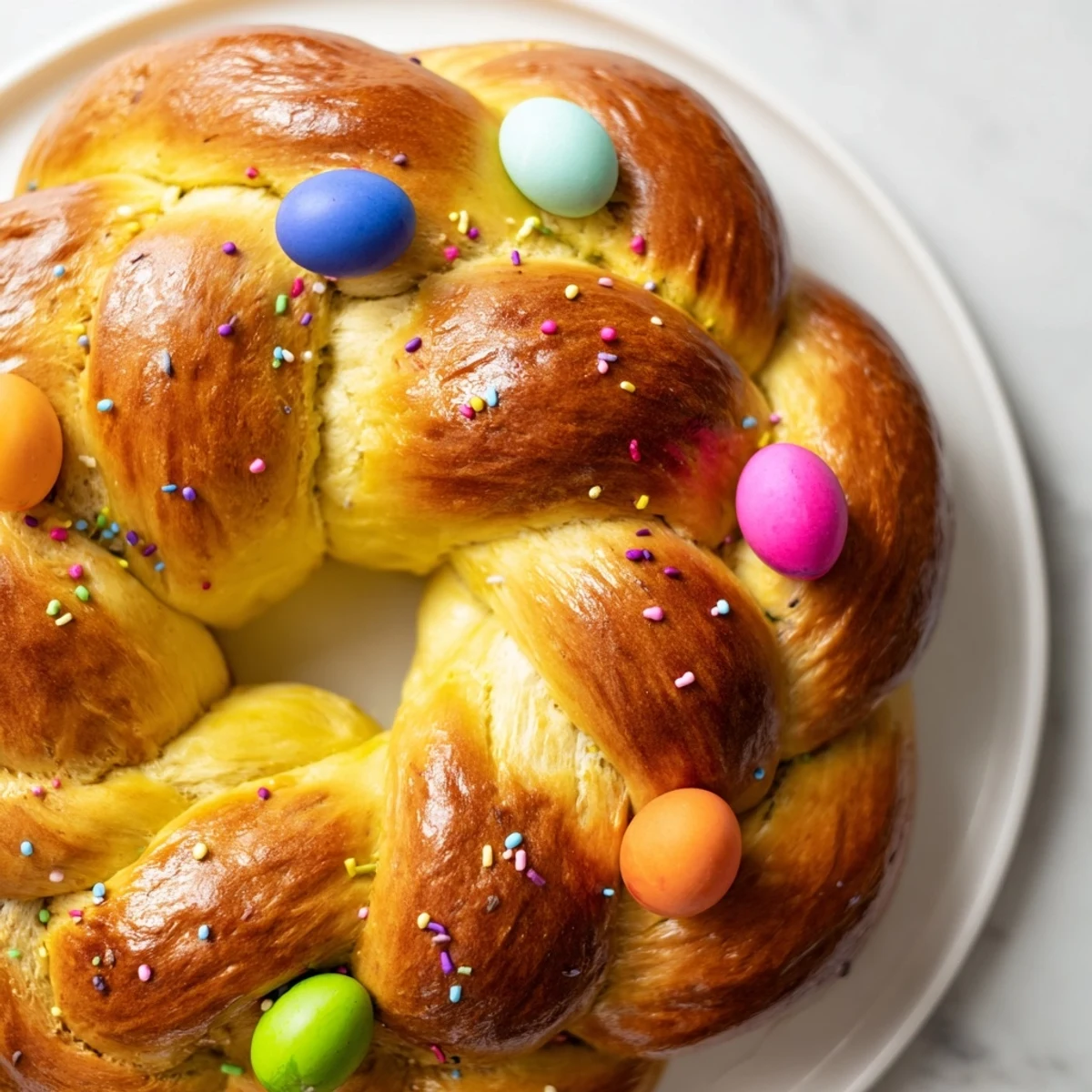
 However you braid it and whoever gathers around your table, this bread marks the season more reliably than any calendar. The eggs will crack when peeled, the sprinkles will scatter, and someone will ask you to make it again next year.
Recipe FAQs
- → How do I achieve vibrant colored eggs?
-
Use food-safe dyes and allow the eggs to dry completely before placing them in the dough braid. This prevents color bleeding into the bread.
- → Can I add spices for extra flavor?
-
Yes, a touch of ground cardamom or lemon zest can add a fragrant nuance to the dough without overpowering its delicate sweetness.
- → What is the best way to braid the dough?
-
Divide the dough into three equal ropes and braid them tightly, pinching the ends to seal and form either a ring shape or a straight braid.
- → How long should the dough rise?
-
Let the dough rise until doubled in size, about one hour for the first rise and another 30 minutes after braiding with the eggs.
- → Can I prepare the dough ahead of time?
-
Yes, you can prepare the dough, refrigerate it overnight after the first rise, then shape and bake the next day for convenience.
