
 Bookmark
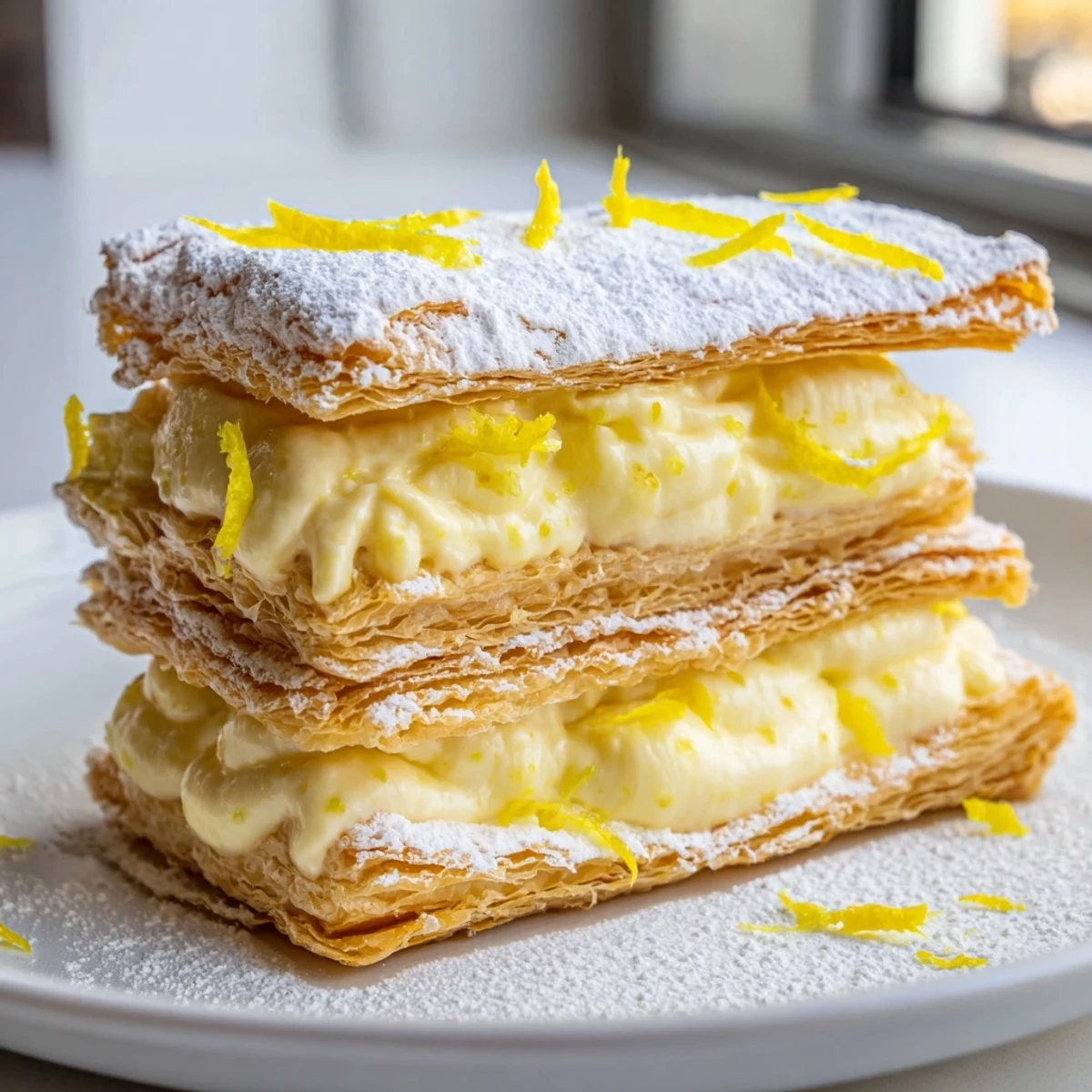
 This lemon ricotta mille feuille combines shatteringly crisp puff pastry with a cloud-like lemon ricotta cream. The pastry is baked flat between two trays to achieve perfectly even, golden layers that snap with each bite.
The filling whips ricotta with fresh lemon zest and juice, folded together with airily whipped cream for a luxuriously light texture. A final dusting of powdered sugar and a touch of lemon zest on top elevate the presentation, making it worthy of any dinner party or afternoon treat.
The window was open and a warm breeze kept flipping my recipe notes off the counter while I tried to shape puff pastry rectangles for the first time. I was attempting a mille feuille for a dinner party, reasoning that something French sounding would impress even if my technique was questionable. The lemon ricotta cream came together so easily that I kept sneaking spoonfuls from the bowl and had to whip extra cream to make up for it.
I brought a platter of these to a friends rooftop gathering last summer and watched three people silently eat an entire plateful before anyone said a word. That quiet chewing was the best compliment I have ever received. Now they request it every time we get together and I secretly love having a signature dessert that takes less than an hour.
Ingredients
- Puff pastry (1 sheet, about 250 g): Store bought is perfectly fine here and honestly saves you an entire afternoon of butter lamination anxiety.
- Granulated sugar (1 tbsp): A light sprinkle on top creates that subtle crunch and caramelized edge before baking.
- Ricotta cheese (250 g): Full fat ricotta makes the cream luxuriously smooth so do not reach for the low fat tub.
- Heavy cream (100 ml): Whipped to stiff peaks and folded in gently for cloud like texture.
- 1 lemon for zest and juice: Fresh is non negotiable here since the lemon flavor is the soul of this whole dessert.
- Powdered sugar (60 g plus extra for dusting): Sweetens the cream without graininess and gives the tops that classic snowy finish.
- Vanilla extract (1 tsp): Rounds out the citrus and adds warmth to the filling.
Instructions
- Get the oven ready:
- Preheat to 200 degrees Celsius (400 degrees Fahrenheit) and line a baking tray with parchment paper so nothing sticks later.
- Cut and sugar the pastry:
- Roll out the puff pastry on a lightly floured surface and cut it into twelve equal rectangles. Lay them on the tray, sprinkle with granulated sugar, then place another sheet of parchment and a second baking tray on top to keep them from puffing into irregular balloons.
- Bake until golden:
- Bake for 15 to 20 minutes until the rectangles are deeply golden and shatteringly crisp. Let them cool completely on a wire rack because warm pastry will melt your beautiful cream.
- Make the lemon ricotta cream:
- Whisk the ricotta in a bowl until perfectly smooth with no lumps, then stir in powdered sugar, lemon zest, lemon juice, and vanilla until everything tastes bright and balanced.
- Whip and fold the cream:
- In a separate bowl, whip the heavy cream to stiff peaks, then gently fold it into the ricotta mixture with a spatula using slow sweeping motions so you do not deflate all that air you just worked in.
- Build the mille feuilles:
- Spread or pipe a generous layer of lemon ricotta cream onto six pastry rectangles, then place a second rectangle on top of each one pressing down just lightly enough to seat them together.
- Finish and serve:
- Dust the tops with powdered sugar through a fine sieve and scatter extra lemon zest over each one. Serve immediately because the magic is in the contrast between crisp pastry and soft cream.
 Bookmark
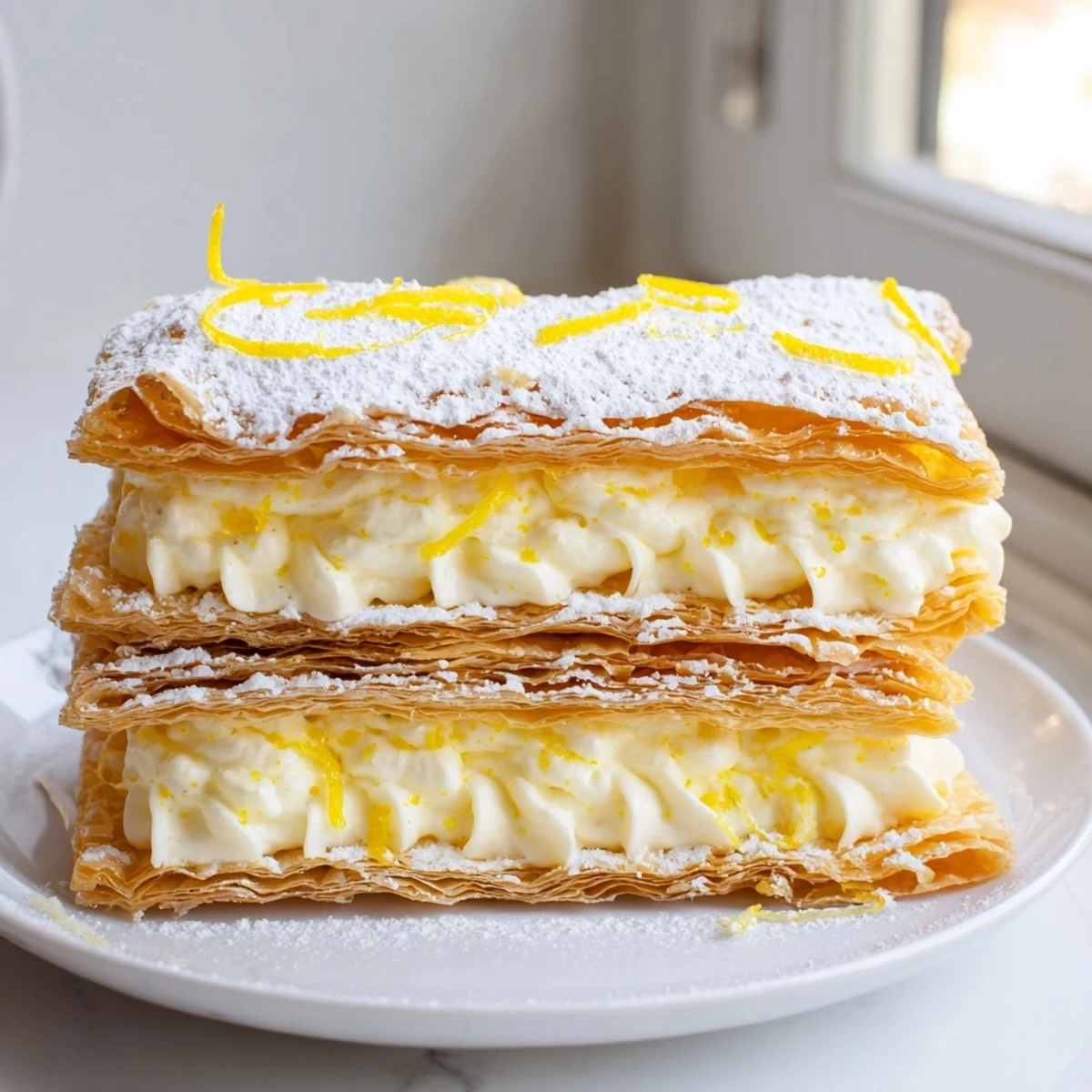
 There is something almost theatrical about placing the top pastry layer on each mille feuille and watching the cream peek out from the edges. It feels like a tiny architectural achievement in your own kitchen.
Pairing Ideas for the Table
A chilled glass of Moscato dAsti alongside one of these mille feuilles turns a simple weeknight dessert into something that feels stolen from a trattoria menu. I once served them after a heavy pasta dinner and the lemon brightness cut through everything perfectly. Limoncello works too if you want to lean fully into the citrus theme.
Fresh Twists Worth Trying
Scatter a handful of fresh raspberries or blueberries between the cream layers and suddenly you have a dessert that looks like it came from a bakery case with a ridiculous price tag. Demerara sugar on the pastry instead of granulated gives a deeper caramel crunch that plays beautifully against the lemon. I tried both variations on separate occasions and guests asked for the recipe both times.
Handling the Pastry Like a Pro
Keep your puff pastry cold until the moment you roll it out because warm butter inside the layers melts too fast and you lose all those gorgeous flaky ridges. Work quickly when cutting the rectangles and do not agonize over perfect edges since a slightly rustic shape only adds charm.
- If the pastry tears while cutting just press the edges back together gently.
- Use a sharp knife or pizza cutter for the cleanest rectangles.
- Leftover scraps bake up beautifully as random crispy snacks sprinkled with cinnamon sugar.
 Bookmark
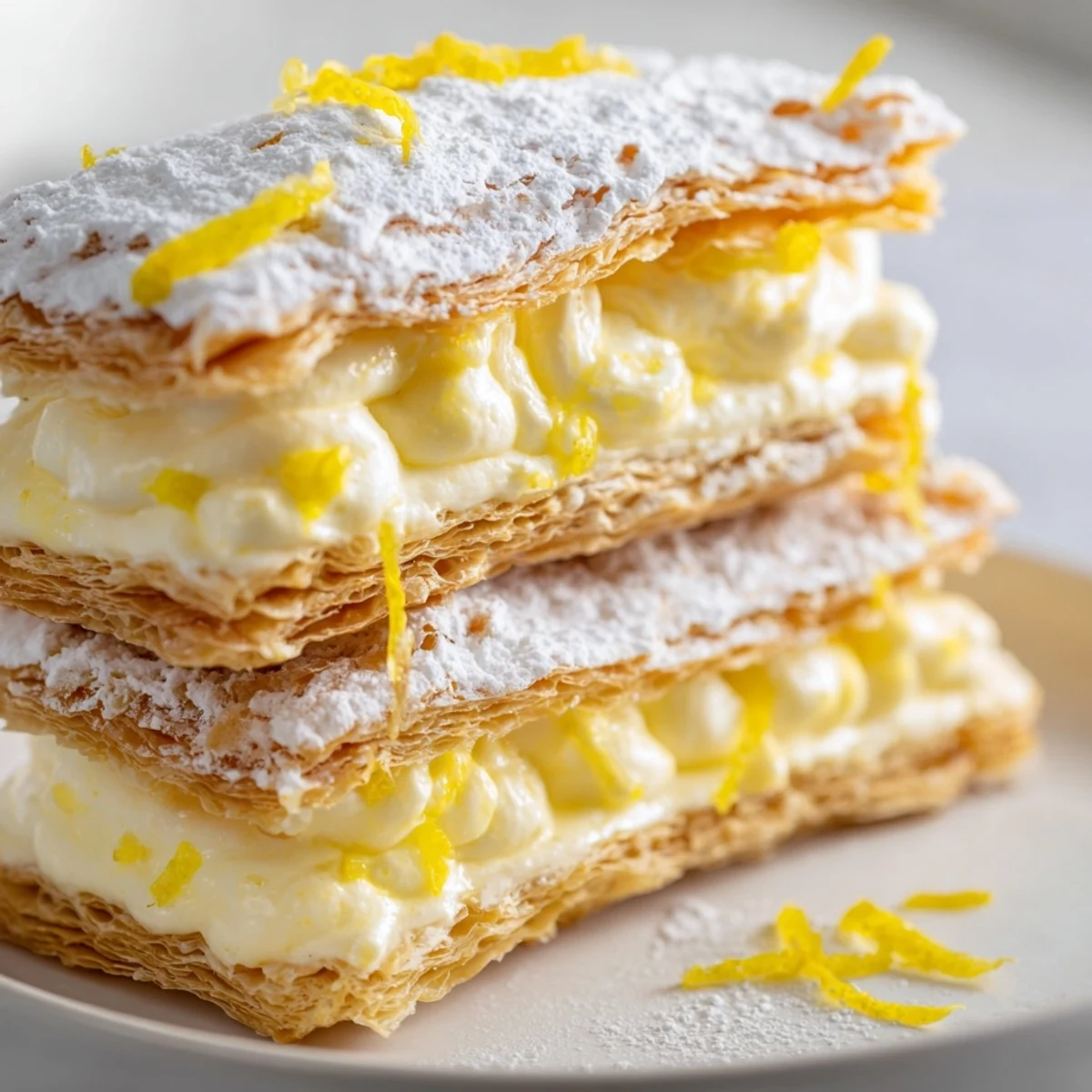
 These little mille feuilles are proof that elegant desserts do not require professional training or endless hours in the kitchen. Share them with someone you love and watch the plates come back empty every single time.
Recipe FAQs
- → Can I make the puff pastry layers ahead of time?
-
Yes, the baked puff pastry rectangles can be prepared up to 24 hours in advance. Store them in an airtight container at room temperature to maintain their crispness. Avoid refrigerating, as moisture will soften the pastry.
- → What can I substitute for ricotta cheese?
-
Mascarpone works beautifully as a direct substitute, yielding an even richer cream. You can also use drained cottage cheese blended until completely smooth, though the texture will be slightly different.
- → Why bake the pastry under a second tray?
-
Placing a second baking tray on top of the pastry prevents it from puffing unevenly. This technique ensures flat, uniform rectangles that are much easier to stack and assemble into neat, elegant layers.
- → How do I keep the assembled mille feuille from getting soggy?
-
Assemble the mille feuille as close to serving time as possible. The cream will gradually soften the pastry. If you need to prepare ahead, keep the baked pastry and the lemon ricotta cream separate, then assemble no more than 1 to 2 hours before serving.
- → Can I freeze puff pastry mille feuille?
-
Freezing the assembled dessert is not recommended, as the ricotta cream will separate and the pastry will lose its signature crispness upon thawing. However, you can freeze the unbaked puff pastry sheets for future use.
- → What size should I cut the pastry rectangles?
-
Aim for rectangles roughly 3 by 4 inches each. Cutting the sheet into 12 equal pieces gives you enough for 6 assembled portions, each consisting of 2 pastry layers sandwiched with the lemon ricotta cream.
